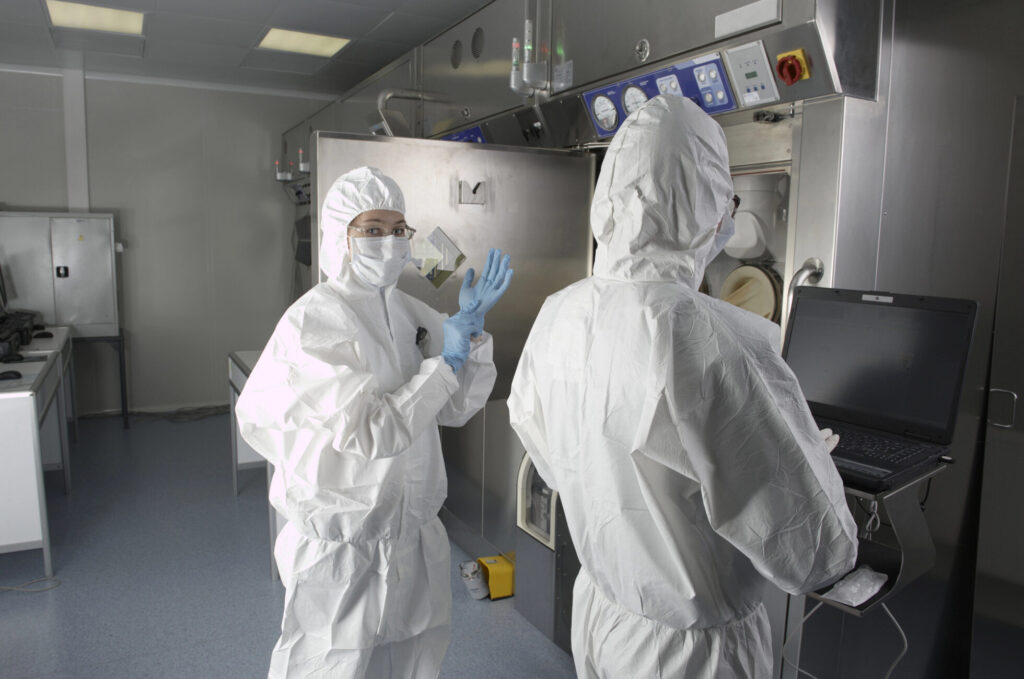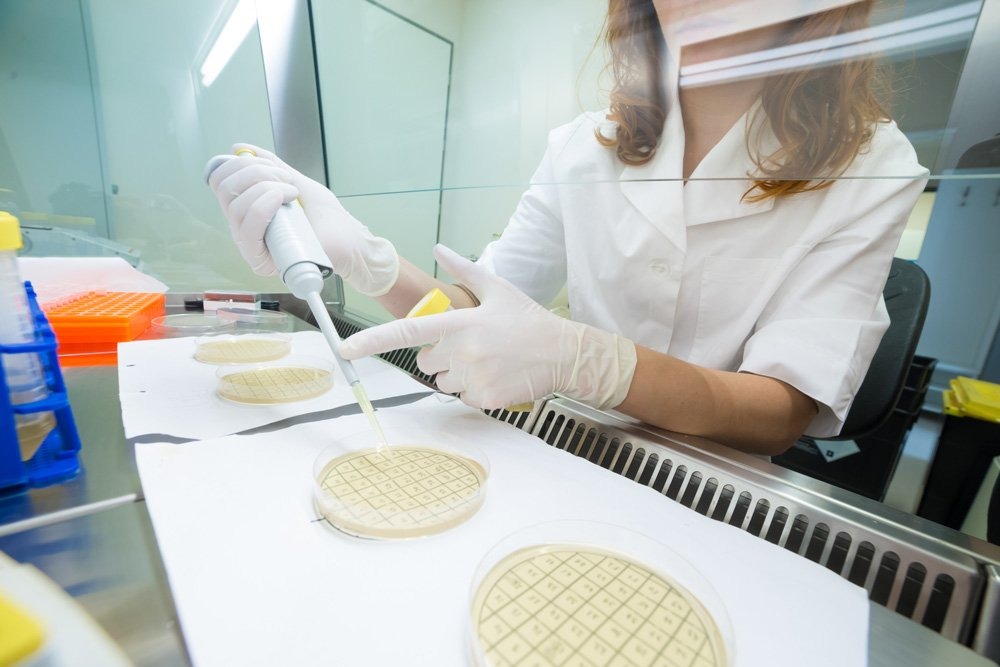

Your cleanroom certification deadline is approaching, and you’re not sure if your facility is ready. The stakes couldn’t be higher—regulatory compliance, production continuity, and patient safety all depend on proper environmental control. A failed certification means delayed audits, halted production, and regulatory scrutiny that no quality manager wants to face.
The ISO cleanroom certification process verifies that your controlled environment meets classification standards and regulatory requirements. Understanding certification requirements eliminates guesswork and ensures first-time success.
This guide breaks down the certification process into three actionable phases: preparation and documentation requirements, on-site classification testing procedures, and how to interpret certification reports for audit readiness. We’ll cover exactly what certifiers test, which documentation auditors examine, and how to avoid common failures that delay certification. Whether you’re managing pharmaceutical manufacturing cleanrooms, biomedical device production, semiconductor fabrication, aerospace component assembly, or other industrial operations requiring ISO 14644 compliance, this step-by-step breakdown eliminates uncertainty and gets your facility certification-ready.
What are the steps to certify an ISO cleanroom?
ISO cleanroom certification follows a structured three-phase process to verify environmental controls meet classification standards.
- Pre-Certification Preparation – Gather facility documentation, stabilize environmental controls, and schedule testing with an accredited provider
- On-Site Classification Testing – Certifier performs particle counting, airflow verification, pressure differential measurements, HEPA filter integrity testing, and airflow visualization studies using calibrated instruments
- Report Review and Compliance Documentation – Receive detailed certification report with test results, classification confirmation, and audit-ready documentation showing NIST traceability
ISO 14644 compliant certification requires testing by providers using NIST-traceable instruments to ensure measurement accuracy and regulatory acceptance.

Pre-Certification Preparation and Documentation
The first phase of this process begins well before certifiers arrive on-site. Proper preparation prevents delays, eliminates surprises during testing, and demonstrates quality system maturity to auditors.
Understanding Your Cleanroom Classification Requirements
ISO 14644-1 establishes the classification system that determines your testing parameters. Classifications range from ISO Class 1-9 with ISO 5-8 being most common in pharmaceutical and manufacturing fields. Your target classification dictates:
- Particle count limits that must be achieved
- Number and location of sampling points
- Minimum air volume that must be tested
Different areas within your facility may require different classifications. Understanding these requirements upfront helps you prepare proper documentation and set realistic expectations.
Essential Documentation Certifiers Need Before Testing
Organized documentation accelerates the certification process and helps certifiers plan effective testing. Recommended documentation includes:
- Facility drawings showing cleanroom layout, airflow patterns, and equipment locations
- Testing criteria for each classified area (eg. differential pressure, ISO class, ACPH)
- Equipment specifications for Primary Engineering Controls
- HVAC system documentation and balance reports
- Previous certification reports for trending (if recertifying)
- Environmental monitoring SOPs
- Personnel access coordination list
Providing comprehensive documentation upfront prevents scheduling delays and demonstrates quality system maturity.
Stabilizing Environmental Controls Before Certification
Your cleanroom must operate at normal conditions for 24-48 hours before testing. Pre-test checklist:
- Verify pressure differentials between classified areas meet specifications
- Confirm HVAC system operates with no alarms or malfunctions
- Document air changes per hour (ACH) meet design requirements
- Address visible damage to HEPA filters, walls, or ceiling systems
- Remove unnecessary equipment or materials affecting particle counts
Testing unstable environments wastes time and money. Particle count excursions during testing often indicate underlying problems—identifying and fixing issues before certification prevents failed results and recertification costs.
Scheduling Certification Around Operations
Certification requires your cleanroom to be in either “at-rest” or “operational” state. At-rest testing means no personnel and no equipment operating—this represents the easiest condition to pass and satisfies minimum regulatory requirements. Operational testing occurs during normal production conditions, providing more stringent verification that demonstrates real-world compliance capability. Testing duration varies based on facility size. Experienced certifiers work with you to optimize scheduling for minimal operational impact.
Once preparation is complete and documentation organized, certification testing follows a standardized protocol that examines multiple environmental parameters.
Practical Differences Between ISO 5, 7, and 8 Rooms
What Certifiers Test During Classification
Understanding what certifiers actually measure during classification testing removes the mystery from the process and helps you prepare your facility for success.
Particle Count Testing and Classification Verification
Particle counters measure airborne particles at 0.5 microns and larger (some classifications also require 5.0 micron counts). ISO 14644-1 provides a mathematical formula based on square footage to determine minimum sampling points. Each location is sampled for sufficient duration to collect statistically significant air volume.
Testing Requirements:
| Element | Requirement |
| Sampling locations | Calculated per ISO 14644-1 formula |
| Test areas | Return air grilles, work surfaces, room centers, problem areas |
| Pass criteria | ALL locations must pass classification limits |
| Instrument calibration | NIST-traceable |
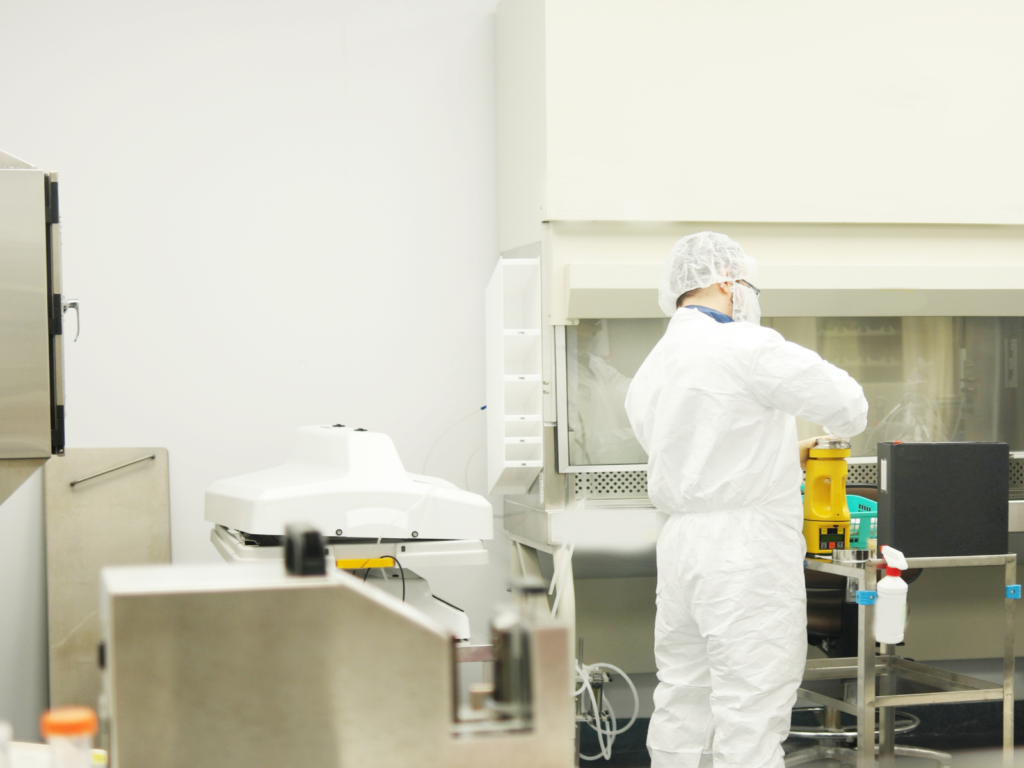
Even one failed location means the entire room fails classification. Inspectors verify particle counter calibration during audits—certification reliability depends on instrument accuracy.
Particle counters must be calibrated to NIST standards. Sampling volume requirements differ by classification—stricter classes require larger air volumes to ensure statistical validity. Inspectors verify that particle counters were recently calibrated during audits, because certification is only as reliable as the instruments used to perform it. This is why choosing an accredited provider protects you during regulatory inspections.
HEPA Filter Integrity Testing (DOP or PAO Testing)
HEPA filters are your final barrier against contamination—they must be 99.99% efficient at removing 0.3 micron particles. [1] Integrity testing (also called DOP, PAO, or aerosol challenge testing) scans the entire filter surface and frame seal.
Testing Process:
- Aerosol challenge introduced upstream of filter
- Photometer scans downstream surface
- Any penetration or leaks are detected and documented
Testing identifies filter media damage, gasket seal failures, or frame leaks allowing contamination bypass. Failed filters must be repaired or replaced before certification proceeds. Even microscopic leaks compromise contamination control. Industry practice typically considers leaks exceeding 0.01% penetration as filter failures requiring remediation.
Airflow Velocity and Air Changes Per Hour Verification
Certifiers measure airflow velocity at HEPA filter faces and work surfaces. Unidirectional ISO Class 5 environments require unidirectional airflow at 0.36-0.54 m/s (90 fpm ±20%) to create the laminar flow that sweeps particles away from critical areas. [2] Non-unidirectional cleanrooms get verified for air changes per hour (ACH) based on design specifications rather than specific velocity targets. Proper airflow removes generated particles and prevents contamination from entering critical work zones. Low airflow readings indicate HVAC system problems or filter loading issues that need correction.
Testing verifies that as-built performance matches design intent. Your facility was engineered to specific airflow parameters—certification confirms your HVAC system delivers what the design promised.
Pressure Differential Measurements Between Cleanroom Areas
Pressure relationships prevent contamination migration between areas. Higher classified rooms maintain positive pressure relative to lower classified areas.
Pressure Requirements:
- Minimum differential: 0.02-0.05 inches water column (5-12 Pascals)
- Testing condition: Doors closed, normal operations
- Cascade concept: Buffer room > ante room > unclassified corridor
- Exception: Negative pressure required for hazardous drug containment
Pressure must be maintained continuously, not just during testing. Failed differentials often indicate door seal problems or HVAC imbalance requiring correction.
The cascade pressure concept is simple: buffer room pressure exceeds ante room pressure, which exceeds unclassified corridor pressure. Each step down creates a barrier. Failed pressure differentials often indicate door seal problems or HVAC imbalance that requires correction before recertification.
Airflow Visualization and Smoke Studies
Smoke studies use visible aerosol generators to verify airflow patterns throughout the cleanroom. The testing confirms that unidirectional airflow properly sweeps particles away from critical work zones while identifying problematic turbulence, dead zones, short circuiting of HEPA filtered air to exhaust grilles, or reverse flow patterns. These visualization studies are recommended for non-standard cleanroom configurations or custom workstation layouts where standard airflow assumptions may not apply. Video documentation captured during testing serves both training purposes and regulatory demonstration.
In manufacturing environments, smoke studies demonstrate that workflow design and equipment placement don’t create airflow disruption. The visualization confirms first air protection—ensuring the cleanest air contacts products before contacting any other surface.
Receiving and Interpreting Your Certification Report
Your certification report is more than a compliance checkbox—it’s legal documentation for regulatory audits and a diagnostic tool for maintaining environmental control.
Understanding Your Certification Report Components
Your certification report serves as legal compliance documentation for regulatory audits.
Report Components:
- Header information: Facility details, test date, environmental conditions, certifier credentials
- Instrument calibration: NIST traceability documentation for all equipment
- Test results: Particle counts, HEPA integrity, airflow measurements, pressure differentials
- Pass/fail determination: Clear classification statement for each area
- Certifier credentials: can include CETA, NSF, ISO 17025 accreditation proof
- Certificate of conformance: Overall compliance summary
Inspectors verify instrument calibration dates and NIST traceability during audits. Certification validity periods are based on ISO classification: maximum 6 months for ISO Class 5 and cleaner environments, and maximum 12 months for ISO Class 6 and above, as specified in ISO 14644-2.
Reading Test Results and Identifying Trends
Compare current results against previous certifications to identify degradation trends before they cause failures:
- Particle counts approaching limits signal potential future problems
- Pressure differential reductions indicate filter loading or system deterioration
- Consistent patterns across locations suggest systemic issues vs. isolated problems
- Seasonal variations reveal HVAC capacity issues
Document trending data for continuous improvement and preventive maintenance planning. Certification data feeds CAPA (Corrective and Preventive Action) systems. Trending helps justify equipment upgrades before failures occur, making your case with objective data. Proactive management reduces emergency recertification costs.
What Happens If Your Cleanroom Fails Certification
Failed certification identifies specific problems requiring correction rather than representing a catastrophic outcome. Common failures include HEPA filter leaks that are often repairable or require replacement, pressure differential issues that need HVAC rebalancing, and particle count excursions indicating contamination sources or inadequate air changes.
After you make corrections, retesting verifies problem resolution before issuing certification. Depending on your facility’s design, contamination control strategy, and the nature of the failure, it may be possible to isolate failed areas while maintaining operations in compliant zones. This approach requires careful evaluation of airflow patterns, pressure cascades, and product/process risks to ensure adequate contamination control. Rather than viewing failures as setbacks, experienced quality managers use them as opportunities—identifying and resolving environmental control weaknesses before regulatory inspectors discover them during audits.
Understanding the complete ISO cleanroom certification process—from preparation through documentation—transforms compliance from reactive scrambling to proactive quality management.
Take Control of Your Cleanroom Certification
Allometrics brings 50 years of cleanroom certification experience across pharmaceutical, biomedical, and industrial applications. Our ISO 17025 accreditation, in addition to our highly-trained, CETA-registered, and NSF-accredited technicians, demonstrate our commitment to measurement accuracy and regulatory compliance. We provide nationwide service with consistent protocols and documentation standards.
Schedule a cleanroom certification consultation to discuss your specific classification requirements. Allometrics provides detailed scope-of-work proposals outlining testing protocols, timelines, and flexible scheduling that accommodates production operations. Call (281) 474-3329.
Beyond initial certification, ask about managed compliance programs that bundle cleanroom certification with calibration services. Allometrics brings 50+ years of cleanroom certification experience across pharmaceutical, biomedical, semiconductor, aerospace, and industrial manufacturing applications.
Cleanroom Certification Questions: From Testing Requirements to Timeline Expectations
Cleanroom certification works through a three-phase process that verifies your controlled environment meets ISO classification standards. We begin with pre-certification preparation where you gather documentation and stabilize environmental controls, then conduct on-site testing using calibrated instruments to measure particle counts, airflow, pressure differentials, and HEPA filter integrity, and finally provide detailed certification reports with NIST-traceable results for audit readiness.
The ISO certification procedure involves pre-certification documentation review, on-site classification testing, and compliance reporting. We test particle counts at multiple locations, verify HEPA filter integrity through aerosol challenge testing, measure airflow velocity and air changes per hour, confirm pressure differentials between classified areas, and conduct airflow visualization studies. All testing uses NIST-traceable calibrated instruments to ensure regulatory acceptance and measurement accuracy.
ISO 14644-1 establishes the classification system and testing parameters for cleanroom certification, while ISO 14644-2 specifies monitoring requirements and certification validity periods. ISO 14644-1 defines classifications from ISO Class 1-9 with particle count limits, sampling point calculations, and minimum air volume requirements. We follow these standards to ensure your facility meets regulatory requirements for pharmaceutical manufacturing, biomedical device production, and other controlled environments.
Resources
- https://www.epa.gov/indoor-air-quality-iaq/what-hepa-filter
- https://ispe.org/pharmaceutical-engineering/september-october-2023/air-speed-qualification-working-position-or