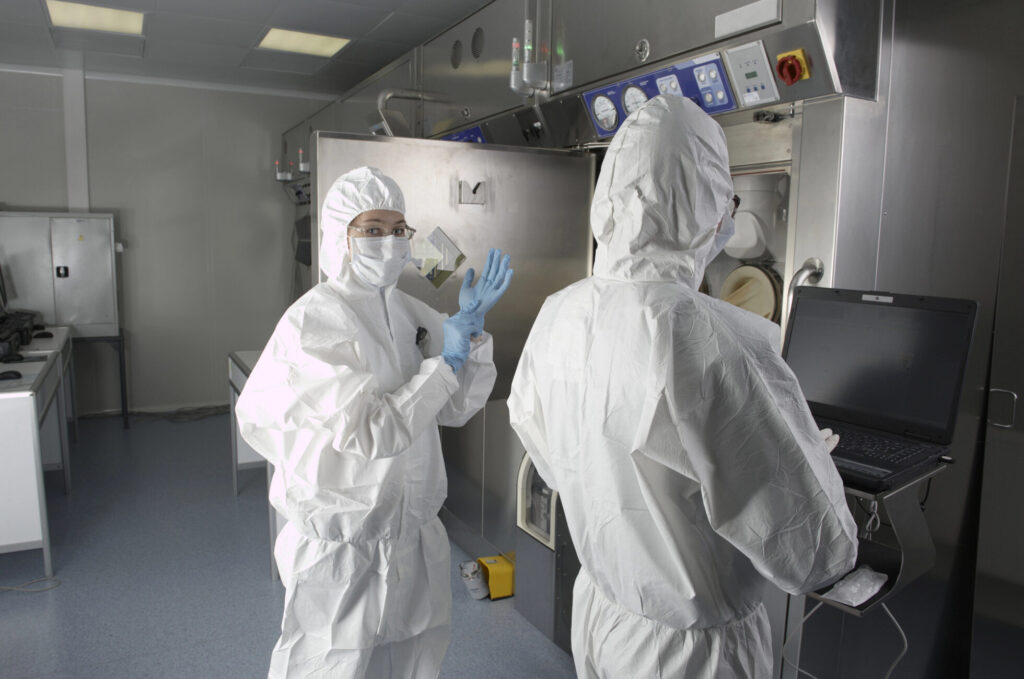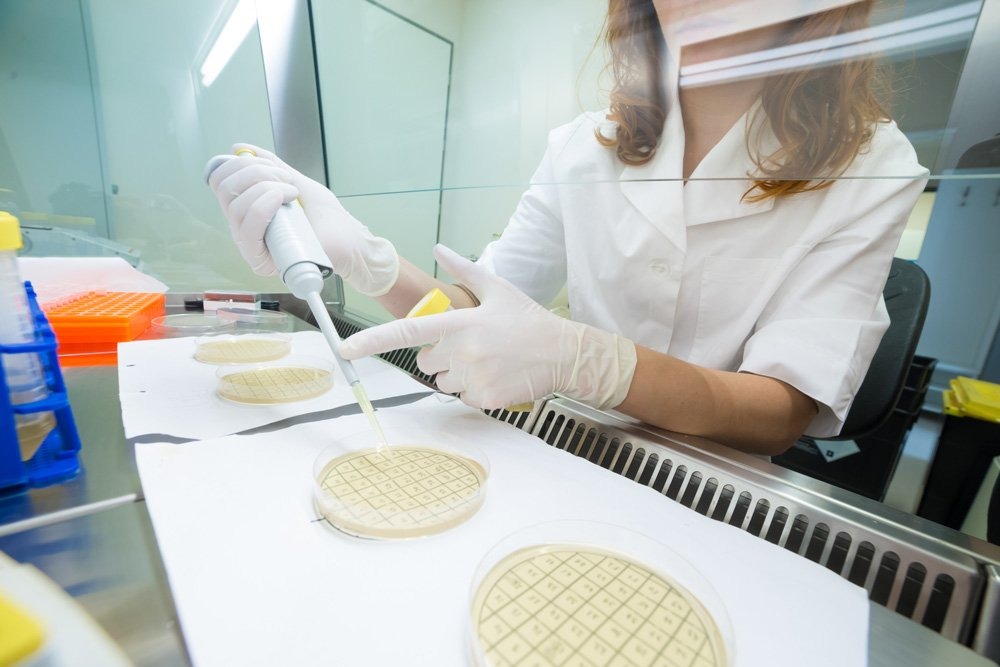

When accreditation surveyors walk into your pharmacy, one of the first things they check is your cleanroom classification documentation. Yet ISO particle count limits and their application to sterile compounding operations remain one of the most technically complex aspects of USP compliance. The standards themselves can be difficult to interpret, creating real risk—both to patient safety and your facility’s regulatory compliance status.
This guide provides a clear explanation of ISO 14644-1 cleanroom classifications, with specific focus on ISO 5, 7, and 8 environments used in pharmacy compounding. We’ll cover how these classifications connect directly to USP 797 and USP 800 requirements, along with practical guidance for understanding which classifications apply to different compounding areas in your facility.
What Are ISO Cleanroom Classifications?
ISO cleanroom classifications are standardized cleanliness levels defined by ISO 14644-1 that measure airborne particle concentrations in controlled environments. The classification system uses numbers from ISO 1 through ISO 9, where lower numbers indicate cleaner environments with fewer particles.
Key classifications for pharmacy compounding:
- ISO 5: Strictest level for sterile compounding inside primary engineering controls like laminar airflow hoods and biological safety cabinets
- ISO 7: Buffer room or segregated compounding area where ISO 5 devices operate
- ISO 8: Ante room for garbing and staging before entering ISO 7 areas
Classifications are verified through particle count testing at 0.5 and sometimes 5.0 micron sizes.
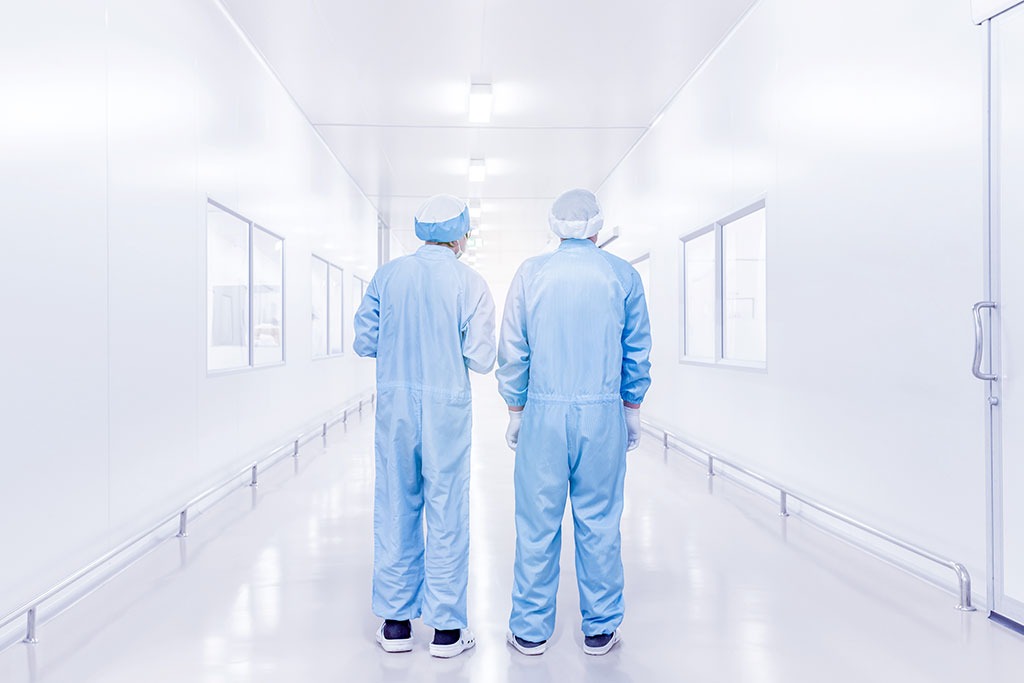
How ISO 14644-1 Defines Particle Count Limits
Understanding the ISO Classification System
ISO 14644-1 assigns classification numbers from ISO 1 through ISO 9 based on maximum permitted particle concentrations per cubic meter of air. Lower numbers mean fewer particles and cleaner environments.
Pharmacy and aerospace applications primarily use three classifications: ISO 5 for primary engineering controls, ISO 7 for buffer rooms, and ISO 8 for ante rooms. [1] Accreditation bodies reference these ISO classifications when evaluating USP 797 compliance during surveys.
For context, an ISO 5 cleanroom allows approximately 3,520 particles (measuring 0.5 microns or larger) per cubic meter of air—that’s remarkably clean compared to typical room air.
Particle Size Measurement and Count Limits
Cleanroom classifications focus on particles measured at specific sizes: 0.1, 0.2, 0.3, 0.5, 1.0, and 5.0 microns.
For pharmacy cleanrooms, testing concentrates on:
- 0.5 microns – Primary measurement (bacteria range: 0.5-5.0 microns)
- 5.0 microns – Secondary measurement
For scale: the average human hair is about 70 microns; bacteria range from about 1 to 10 microns in length and from 0.2 to 1 micron in width. [2] [3]
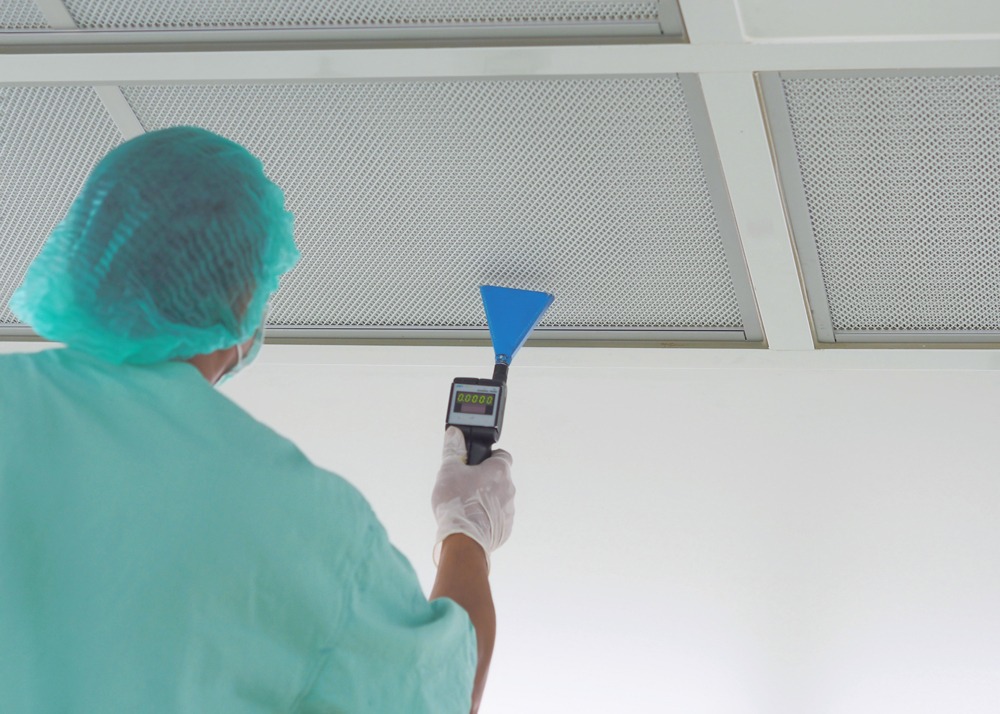
Particle counters sample air from multiple locations throughout the room and provide real-time concentration measurements. The ISO 14644-1 standard defines maximum permitted concentrations for each classification level in a detailed table. Here’s how the three pharmacy classifications compare:
| Classification | Max Particles ≥0.5 microns/m³ | Max Particles ≥5.0 microns/m³ |
| ISO 5 | 3,520 | 29 |
| ISO 7 | 352,000 | 2,930 |
| ISO 8 | 3,520,000 | 29,300 |
Testing methodology requires sampling at multiple points throughout the room, with the number of sampling locations calculated based on room size. The standard specifies minimum sample volumes to ensure statistically valid results. Cleanrooms can be tested in two states: at-rest (fully operational but empty) or operational (during normal activities).
At-Rest vs. Operational Testing States
At-rest testing occurs when the cleanroom is fully operational with HEPA filtration running, but no personnel or compounding activities are present. Operational testing happens during normal compounding activities with staff performing typical work tasks. USP 797 requires operational state certification for pharmacy cleanrooms because this reflects real-world conditions during actual medication preparation.
Operational state testing presents greater challenges—personnel are the largest source of contamination in any cleanroom environment. Most cleanroom failures occur during operational state testing rather than at-rest testing. This is why proper garbing procedures and aseptic technique training directly impact your facility’s ability to maintain certification during active compounding operations.
Classification Verification Requirements
USP 797 requires cleanroom certification every six months, which is more frequent than the annual testing typical in manufacturing facilities. This increased frequency reflects the critical nature of sterile compounding and direct patient safety implications. Testing must include multiple sampling locations based on room size, calculated using the square root of the floor area in square meters.
Each sampling location requires a minimum sample volume as specified by ISO 14644-1 to ensure statistical validity. Documentation from these certifications must be maintained for accreditation surveys from Joint Commission, state boards of pharmacy, and other regulatory bodies. The Controlled Environment Testing Association (CETA) provides additional guidance on cleanroom certification best practices specific to pharmaceutical applications.
Allometrics’ ISO 17025 accredited particle counters maintain NIST-traceable calibration, ensuring all measurements are defensible during regulatory inspections. Call our experts at (281) 474-3329 with questions or to schedule your cleanroom testing and certification.
Practical Differences Between ISO 5, 7, and 8 Rooms
ISO Class 5 Cleanrooms – Primary Engineering Controls
ISO Class 5 represents the strictest classification, allowing a maximum of 3,520 particles (≥0.5 microns) per cubic meter of air.
This level is required inside:
- Laminar airflow hoods
- Biological safety cabinets (Class II)
- Compounding aseptic isolators (CAIs)
- Compounding aseptic containment isolators (CACIs)
These primary engineering controls create the direct product exposure zone where critical compounding steps occur.
Inside your laminar airflow hood—where you’re drawing up medications and performing aseptic manipulations—HEPA filtration provides unidirectional airflow over the sterile preparation area. This constant airflow sweeps particles away from critical surfaces and maintains the ISO 5 classification even during active compounding operations. The visual characteristic you’ll notice is the constant airflow pattern, either horizontal (flowing toward you) or vertical (flowing downward) depending on hood design.
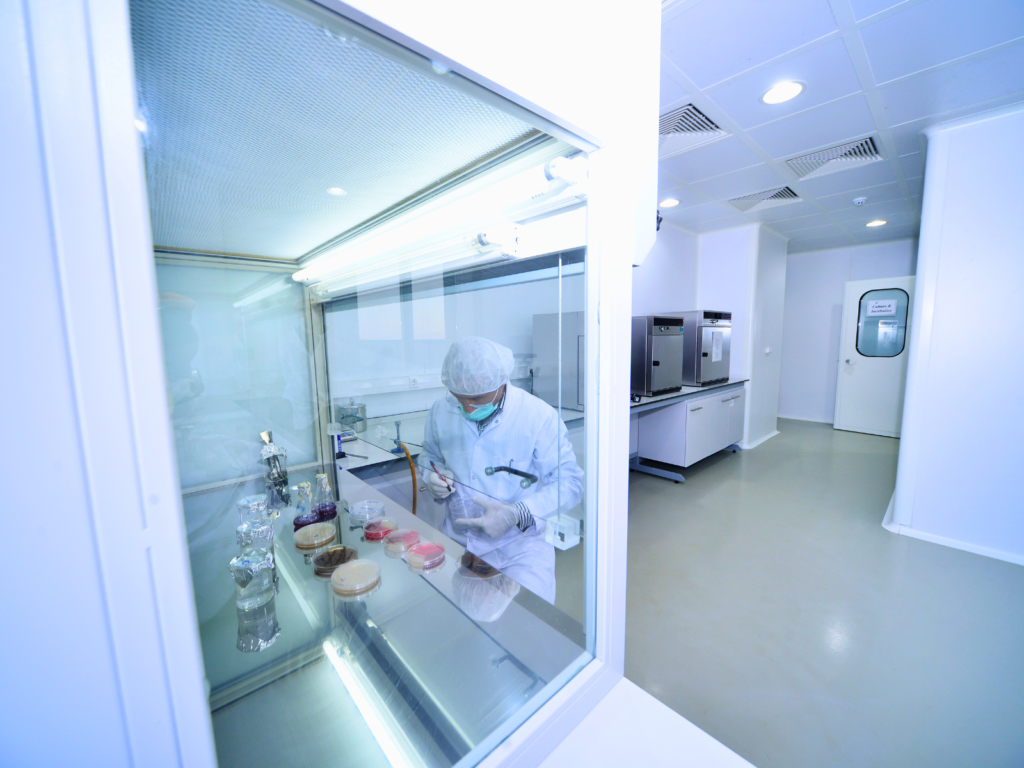
ISO Class 7 Cleanrooms – Buffer Rooms and Segregated Compounding Areas
ISO Class 7 cleanrooms allow maximum concentrations of 352,000 particles (≥0.5 microns) per cubic meter—100 times less strict than ISO 5, but still remarkably clean compared to ordinary room air. This classification is required for buffer rooms operating under positive pressure and segregated compounding areas where ISO 5 primary engineering controls are located.
The buffer room is where your laminar airflow hood sits—your main sterile compounding workspace. This entire room receives HEPA-filtered air with a minimum of 30 air changes per hour. The room maintains positive pressure differential of +0.02 to +0.05 inches water column relative to adjacent areas. This positive pressure prevents unfiltered air from entering the cleaner space whenever doors open or close.
Personnel must complete garbing before entry, and traffic should be minimized during compounding. The room serves dual purposes: it houses your primary engineering controls and provides storage for sterile supplies and compounding ingredients.
Pressure differential monitoring is required, typically displayed on visual indicators or electronic monitoring systems. If pressure differentials fall outside specified ranges, immediate investigation is required and may necessitate cleanroom recertification before resuming compounding operations.
ISO Class 8 Cleanrooms – Ante Rooms
ISO Class 8 cleanrooms permit maximum concentrations of 3,520,000 particles (≥0.5 microns) per cubic meter. This classification is required for ante rooms and hazardous drug storage areas when configured with negative pressure. The ante room serves as a transition space for garbing and material staging before personnel enter the ISO 7 buffer room.
For non-hazardous compounding, ante rooms maintain positive pressure with a minimum of 20 air changes per hour.
This is where you change from street clothes into full cleanroom garb—gowning, gloving, masking, and performing hand hygiene. Material decontamination also occurs here before items enter the buffer room. Many facilities face space constraints when trying to maintain separate ante rooms for sterile compounding operations versus hazardous drug handling areas, but USP 800 requires this separation for proper containment.
Pressure Differential Relationships
The relationship between cleanroom spaces creates a pressure cascade that prevents contamination migration.
Non-hazardous compounding (positive pressure cascade):
ISO 5 Primary Engineering Control → ISO 7 Buffer Room → ISO 8 Ante Room → Unclassified Space
Hazardous drug areas (negative pressure cascade):
Unclassified Space → ISO 8 Ante Room → ISO 7 Buffer Room → ISO 5 Containment Device
This pressure reversal ensures hazardous drug vapors cannot escape into occupied areas of the pharmacy or hospital.
Pressure monitoring systems with visual indicators or electronic displays allow continuous verification that pressure relationships remain correct. Any pressure failure triggers immediate investigation and potential cleanroom shutdown until the issue is resolved.
Matching Cleanroom Class to Your Application
Non-Hazardous Sterile Compounding Layout
The standard configuration for Category 1 and Category 2 sterile compounding uses a positive pressure cascade to prevent contamination entry. The typical layout progresses from an unclassified corridor through an ISO 8 ante room, into an ISO 7 buffer room, and finally to ISO 5 hoods or isolators.
In a typical hospital IV room:
- ISO 8 Ante Room: Garbing and material decontamination
- ISO 7 Buffer Room: Compounding operations and supply storage
- ISO 5 Primary Engineering Control: Actual medication preparation
Traffic flow follows a one-way progression from dirtier to cleaner areas. Staff should avoid unnecessary back-and-forth movement that disrupts pressure differentials and introduces contamination risks. During high-volume compounding periods like chemotherapy preparation days or total parenteral nutrition (TPN) batch production, managing workflow while maintaining environmental controls becomes particularly challenging. Training staff on proper room-to-room transitions is critical, especially since Joint Commission surveyors focus heavily on personnel behavior during observations.
Hazardous Drug Compounding Areas (USP 800)
Hazardous drug compounding requires a negative pressure configuration that reverses the normal pressure cascade. The containment primary engineering control (such as a ClassII/III biological safety cabinet or a CACI) maintains the most negative pressure, followed by the buffer room, then the ante room, and finally unclassified space.
USP 800 requirements:
- Separation from non-hazardous compounding (separate facility or properly segregated area)
- External venting mandatory (no air recirculation)
- Minimum 12 air changes per hour in buffer room (even under negative pressure)
- Dedicated hazardous drug storage in negative pressure ISO 8 area
Primary engineering controls for hazardous drugs:
- Biological safety cabinets (Class II)
- Compounding aseptic containment isolators (CACIs)
- Never standard laminar airflow hoods
Exhaust system requirements demand coordination with building engineering teams to ensure proper venting. Monitoring negative pressure differentials requires different procedures than positive pressure monitoring. Decontamination protocols are also more rigorous—surfaces that contacted hazardous drugs require specific cleaning procedures before decommissioning or recertification.
Radiopharmacy Cleanrooms (USP 825)
Radiopharmacies require ISO 5 classification inside hot cells, but radiation shielding complicates standard airflow patterns. These facilities use laminar airflow workstations inside shielded enclosures to maintain sterile conditions while protecting staff from radiation exposure. Dual compliance with sterile compounding and radiation safety protocols, combined with time-sensitive compounding due to short radioisotope half-lives, makes environmental control particularly challenging.
Selecting Classification Based on Compounding Risk
USP 797 categorizes compounding operations as Category 1 (low-risk with simple manipulations) or Category 2 (medium-risk with complex manipulations). All categories require ISO 5 primary engineering controls for the actual compounding work. The main difference lies in environmental monitoring frequency and beyond use date (BUD) assignments.

When Professional Certification Testing Is Required
Cleanroom certification testing is required in several situations:
- Every 6 months per USP 797
- Before initial operations
- After facility modifications or HEPA filter replacement
- Following particle count excursions or pressure failures
- Before accreditation surveys
Testing scope includes:
- Particle counts at multiple sampling locations
- Pressure differential verification
- Airflow visualization studies
- HEPA filter integrity testing
Allometrics, established 1976, has decades of experience testing certified cleanrooms. Our highly-trained, CETA-registered, and NSF-accredited technicians work around your patient care schedules to complete certifications without disrupting operations, providing survey-ready documentation for Joint Commission and state board inspections.
Call (281) 474-3329 to schedule your cleanroom certification testing
ISO Cleanroom Classification Standards: Your Questions Answered
ISO cleanroom classifications are standardized cleanliness levels defined by ISO 14644-1 that measure airborne particle concentrations in controlled environments. The system uses classifications from ISO 1 through ISO 9, where lower numbers indicate cleaner spaces with fewer particles, verified through particle count testing at 0.5 and 5.0 micron sizes.
ISO 5 and ISO 7 serve different purposes rather than one being better than the other. ISO 5 is significantly cleaner than ISO 7and is required inside primary engineering controls like laminar airflow hoods where actual medication preparation occurs, while ISO 7 is used for buffer rooms that house those controls and provide the surrounding compounding workspace.
ISO 5 allows just 3,520 particles at 0.5 microns per cubic meter, while ISO 8 permits 3,520,000 particles—a thousand-fold difference. ISO 5 is maintained inside primary engineering controls for direct compounding work and ISO 8 in ante rooms for garbing and staging.
Resources
- https://pmc.ncbi.nlm.nih.gov/articles/PMC11387226/
- https://www.epa.gov/pm-pollution/particulate-matter-pm-basics
- https://wqa.org/resources/bacteria-virus/