

We’ve provided gage block calibration services for manufacturers, laboratories, and quality professionals nationwide for 50+ years. Gage blocks (also called gauge blocks) are precision measurement standards that require periodic calibration to maintain accuracy and traceability. Whether you’re supporting quality control, validating inspection equipment, or maintaining measurement standards, reliable calibration keeps your dimensional measurements dependable.
Allometrics’ calibration lab offers both NIST traceable calibration and A2LA ISO 17025 accredited calibration services, allowing you to select the level of documentation and traceability your applications require. Every certificate provides clear measurement data supporting your quality objectives.
Our metrologists understand precision measurement requirements, and we’re here to support your quality goals with responsive service you can depend on.
Types of Gage Blocks We Calibrate
Our calibration services support the full range of gage block types used in manufacturing, quality control, and metrology laboratories.
Gage Block Types:
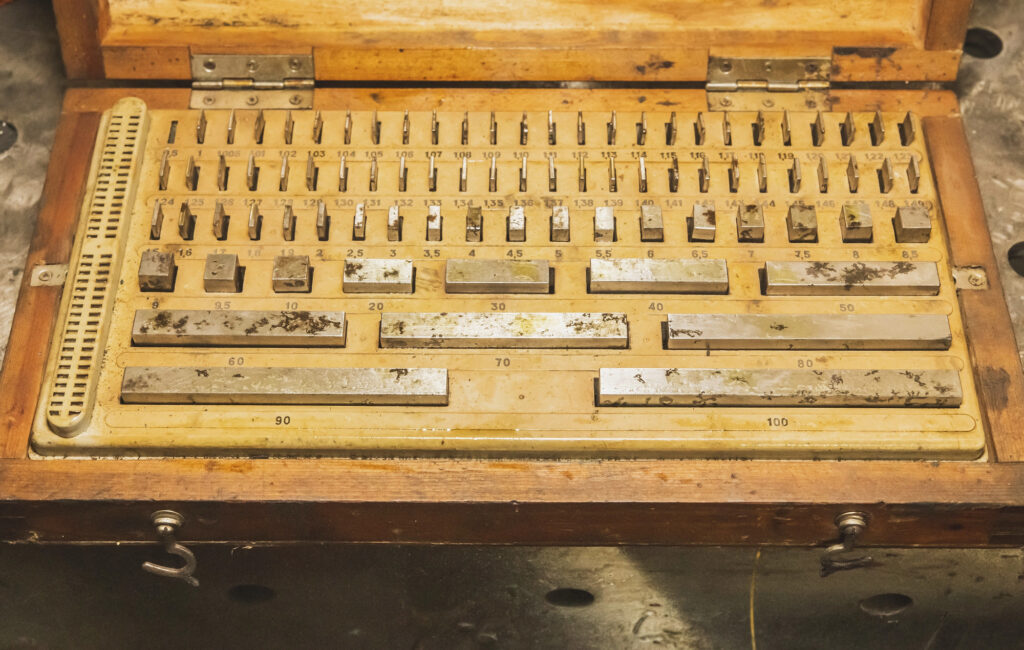
- Rectangular Blocks – The most common configuration for general dimensional measurement and equipment setup
- Square Blocks – Used for specialized applications requiring equal dimensions
- Wear Blocks – Protective blocks that extend the life of precision measurement sets
- Angle Blocks – Precision angular standards for inspection and measurement applications
- Scribing Blocks – Height measurement standards with adjustable scribing attachments
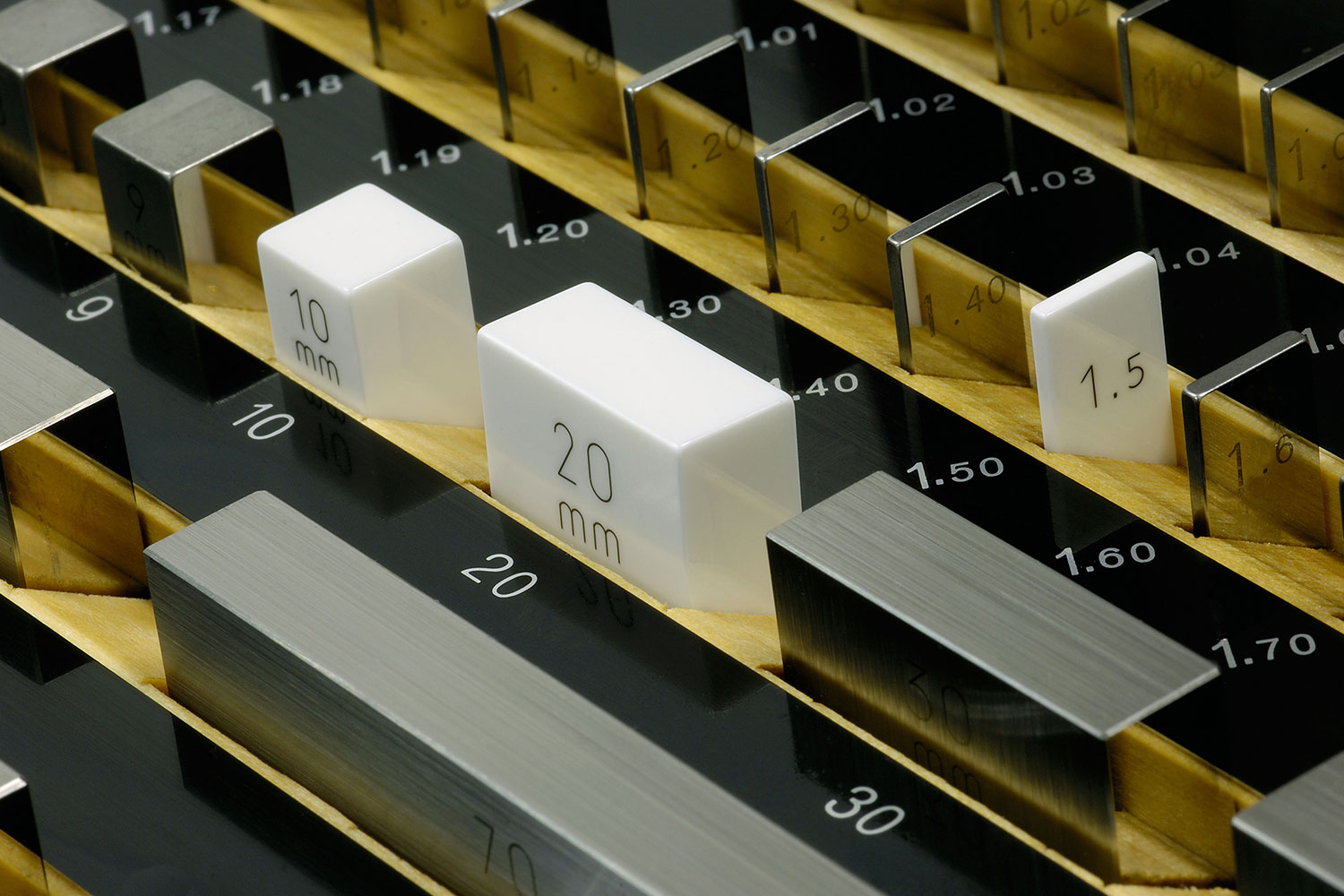
We calibrate individual blocks, complete sets, and master blocks regardless of manufacturer. Whether you maintain Mitutoyo, Starrett, Brown & Sharpe, or other precision gage block brands, our accredited calibration services provide the documented traceability your quality system requires.
Industries That Trust Allometrics’ Gage Block Calibration Services
Precision gage blocks serve as dimensional measurement standards across industries where accuracy and documented traceability matter.

Industries We Serve Include:
- Petrochemical and refining facilities
- Aerospace and defense manufacturing
- Automotive production and suppliers
- Pharmaceutical manufacturing
- Medical device manufacturers
- Chemical processing plants
- General manufacturing operations
Why Quality Professionals Trust Allometrics for Gage Block Calibration
A2LA ISO 17025 Accredited Laboratory Our calibration laboratory holds A2LA accreditation to ISO/IEC 17025, demonstrating technical competence through independent assessment. When auditors review your calibration certificates, they’re examining documentation from a laboratory meeting internationally recognized quality standards.
NIST Traceable Measurement Standards Every gage block calibration traces back to NIST standards. [1]
50+ Years of Proven Service Since 1976, we’ve calibrated gage blocks for pharmaceutical manufacturers, aerospace suppliers, and quality laboratories nationwide. This experience means we understand what auditors expect and how calibration documentation supports your compliance objectives.
Nationwide Service, Consistent Quality Whether you operate a single facility or manage multiple locations, you receive consistent accredited calibration service and documentation quality that simplifies vendor management and quality system requirements.
Professional Documentation Our calibration certificates include complete measurement data, traceability information, and when necessary, uncertainty statements, environmental conditions, and more—the technical details quality managers need without requiring follow-up clarification.
About Our Gage Block Calibration Process
What is Gage Block Calibration?
Gage block calibration measures precision length standards against reference standards with documented traceability to NIST. The process determines each block’s actual length, compares it against nominal specifications, and documents measurement uncertainty. This verification confirms your gage blocks remain within acceptable tolerances and provides the traceability documentation required for quality system compliance and regulatory audits.
Benefits of Professional Gage Block Calibration
Measurement System Confidence – Calibrated gage blocks provide known reference standards for validating micrometers, calipers, height gages, and CMM equipment. When you verify inspection equipment against calibrated blocks, you establish measurement capability based on documented accuracy rather than assumption.
Regulatory Compliance Support – ASME, API, FDA, and other industry standards require documented measurement traceability. [2] Professional calibration provides the certificates and traceability statements auditors expect, demonstrating proactive quality management rather than reactive compliance.
Cost Prevention – Periodic calibration identifies measurement drift before it causes quality problems. Catching errors early prevents scrapped parts, rework costs, and customer complaints—far less expensive than shipping out-of-specification products or failing customer audits.
Risks of Neglecting Gage Block Calibration
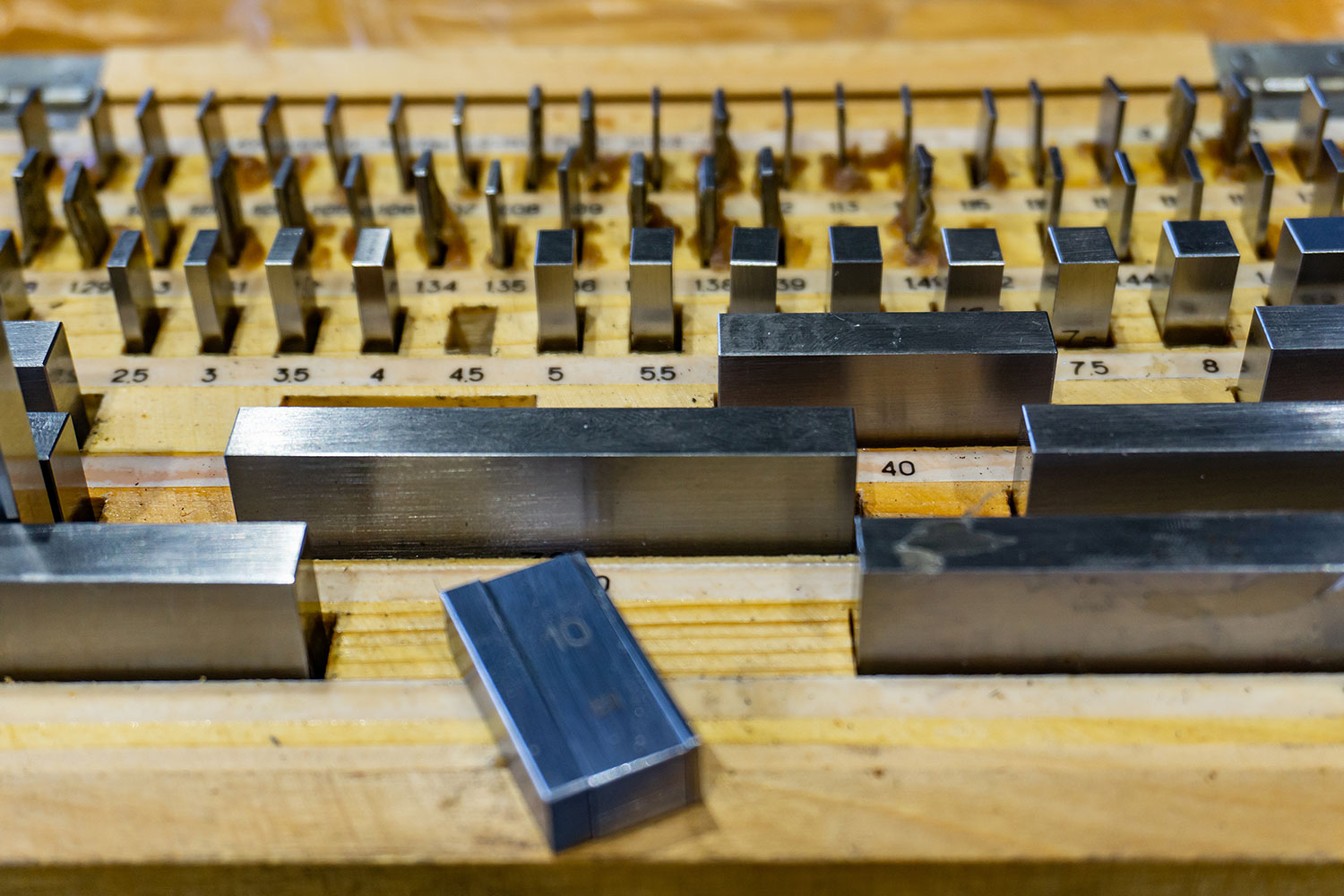
Audit Failures – Quality system auditors specifically review measurement equipment calibration records. Missing or expired gage block calibration creates audit findings, potentially affecting certifications, customer approvals, and regulatory standing. The cost and disruption of addressing non-conformances far exceeds maintaining proper calibration schedules.
Measurement System Breakdown – Uncalibrated gage blocks create cascading errors throughout your quality system. When blocks have unknown accuracy, every subsequent measurement becomes questionable. Product appearing to meet specifications may actually fall outside tolerances, while acceptable parts might be incorrectly rejected.
Customer Confidence Issues – When customers audit your facility, calibration records demonstrate measurement capability. Expired or missing gage block calibration raises questions about your entire quality system, potentially affecting contracts and business relationships.
Frequent Gage Block Calibration Questions Answered
Gage blocks are calibrated by measuring precision length standards against reference standards with documented traceability to NIST. The process determines each block’s actual length, compares it against nominal specifications. This verification confirms your blocks remain within acceptable tolerances and provides required traceability documentation.
Allometrics provides A2LA ISO 17025 accredited gage block calibration services nationwide from our Webster, Texas laboratory. Whether you operate one facility or manage multiple locations, you receive consistent accredited service and documentation quality. Contact us at (281) 474-3329 to discuss your calibration requirements and schedule service.
There’s no difference—both ‘gage blocks’ and ‘gauge blocks’ refer to identical precision length standards used in metrology and manufacturing. “Gage blocks” is the spelling preferred by U.S. technical industries and the National Institute of Standards and Technology (NIST). “Gauge blocks” is also widely used and appears frequently in both U.S. and international technical literature. Both spellings are correct and interchangeable within the field.
Resources
- https://www.nist.gov/pml/sensor-science/dimensional-metrology/selected-publications-dimensional-metrology-gage-blocks
- https://www.fda.gov/medical-devices/postmarket-requirements-devices/quality-system-qs-regulationmedical-device-current-good-manufacturing-practices-cgmp