
In 1925, Hermann Hospital opened its doors on what was then little more than rice fields and swampland south of downtown Houston. Tuberculosis patients were wheeled onto the building’s balconies for sun therapy, gazing across empty landscapes that few could have imagined would one day transform into the world’s largest medical complex.
Today, the Texas Medical Center stands as something far beyond what its founders envisioned. Spanning over 1,345 acres in the heart of Houston, TMC has grown from that single hospital into a sprawling medical metropolis housing over 60 institutions, including the world’s largest children’s hospital and the world’s largest cancer hospital. With more than 120,000 employees, 10 million annual patient encounters, and an estimated economic impact exceeding $25 billion, the Texas Medical Center has redefined what’s possible in healthcare [1].
From pioneering the first successful heart transplant in the United States to developing revolutionary cancer immunotherapies that earned a Nobel Prize, TMC’s century-long journey represents not just Houston’s transformation, but the evolution of modern medicine itself. This is the story of how a bold vision planted in Texas soil grew to change healthcare worldwide.
What is the Texas Medical Center Known For?
The Texas Medical Center is known for:
- Pioneering heart surgery – First successful U.S. heart transplant (1968), first coronary artery bypass (1964), and world’s first total artificial heart implantation (1969)
- World’s largest medical complex – Over 60 institutions spanning 1,345 acres with 120,000+ employees
- Cancer treatment leadership – Houses MD Anderson Cancer Center, the world’s largest cancer hospital; Nobel Prize for cancer immunotherapy (2018)
- Pediatric care excellence – Texas Children’s Hospital is the world’s largest children’s hospital
- Recent innovations – First human implantation of magnetically levitated artificial heart (2024)
Massive patient impact – 10 million annual patient encounters
The Founding Vision: From Swampland to Medical Metropolis (1925-1945)
Hermann Hospital Opens Its Doors (1925)
The story of the Texas Medical Center begins with a single institution and one man’s final wish. George Hermann, a Houston businessman and philanthropist who died in 1914, left his entire estate to the city with instructions to build a hospital for the poor. After years of planning and construction, Hermann Hospital finally opened in 1925, located on what most Houstonians considered the edge of civilization—acres of undeveloped land south of downtown where rice fields met marshland [2].
The hospital’s design reflected the medical thinking of its time. Wide balconies wrapped around the building’s exterior, allowing tuberculosis patients to receive fresh air and sunlight, treatments considered cutting-edge in the 1920s. With just 100 beds, the facility served Houston’s growing population, but few could have predicted it would become the seed from which an entire medical district would grow.
The M.D. Anderson Foundation’s Transformative Gift (1936-1942)
The catalyst for transforming Hermann Hospital from a standalone institution into the nucleus of something larger came from Monroe Dunaway Anderson, a banker and cotton trader who accumulated significant wealth through his business partnerships. When Anderson died in 1939, his will established the M.D. Anderson Foundation with a mandate to support health, education, and charitable causes in Texas.
The foundation’s board, led by Colonel William Bates, recognized an opportunity. In 1941, they approached the Texas Legislature with an audacious proposal: if the state would establish a cancer research hospital, the foundation would provide the land and initial funding. The legislature approved the creation of the University of Texas M.D. Anderson Cancer Research Hospital in 1941, though the facility wouldn’t open until years later due to World War II.
Voters Approve the Medical Center Concept (1943)
While the cancer hospital was being planned, Dr. Ernst William Bertner—a UTMB Galveston graduate who had become Hermann Hospital’s chief of staff—began dreaming bigger. He envisioned not just two or three hospitals clustered together, but an entire “city of medicine” where teaching, research, and patient care could flourish side by side.
In 1943, Houston voters approved a bond issue that allowed the city to donate land to what would become the Texas Medical Center. The M.D. Anderson Foundation purchased an additional 134 acres of rice fields and swampland, and on September 10, 1945, Texas Medical Center, Inc. was officially chartered. Dr. Bertner became its first president, though tragically, he would die just five years later, before seeing his vision fully realized.
Building the Foundation: Post-War Expansion and Early Institutions (1945-1960)
Baylor College of Medicine Relocates from Dallas (1947)
The Texas Medical Center’s transformation from concept to reality accelerated when Baylor University College of Medicine in Dallas faced a crossroads. The medical school, struggling with limited resources and facilities, needed a new home. Dr. Bertner saw an opportunity and convinced Baylor’s leadership that Houston’s emerging medical district offered something Dallas couldn’t—proximity to multiple hospitals, research facilities, and collaboration opportunities.
In 1943, Baylor agreed to relocate, and by 1947, Baylor College of Medicine had officially moved to Houston, becoming one of the first institutions to join Hermann Hospital in the developing medical complex. The move brought not just a medical school, but also attracted talented physicians and researchers who would shape the future of American medicine. Among them was a young vascular surgeon named Michael DeBakey, who would soon make Houston synonymous with heart surgery innovation.
The relocation also established a model that would define the Texas Medical Center’s growth: independent institutions operating on shared land, collaborating without sacrificing autonomy. This structure allowed each organization to maintain its identity while benefiting from proximity to others.
Texas Children’s Hospital and Methodist Hospital Join the Campus (1950s)
The 1950s brought rapid expansion as Houston’s post-war economic boom fueled both population growth and philanthropic giving. In 1954, Texas Children’s Hospital opened its doors with just 106 beds, founded by a group of civic leaders who recognized Houston’s need for specialized pediatric care. The hospital was built across the street from Hermann Hospital, physically linking the growing complex.
Methodist Hospital followed in 1951, initially opening in the Heights neighborhood before moving to the Texas Medical Center campus in 1964. The addition of Methodist brought another major teaching hospital to the district, further strengthening the concentration of medical expertise.
By 1960, the Medical Center that had existed only as drawings and blueprints fifteen years earlier had become a functioning reality. The campus housed Baylor College of Medicine, Hermann Hospital, M.D. Anderson Hospital (which had opened in 1954), Texas Children’s Hospital, and Methodist Hospital, along with several smaller specialized facilities. The rice fields were disappearing, replaced by modern buildings connected by tunnels and skywalks.
Ernst Bertner’s Vision of a “City of Medicine”
Dr. Bertner’s original vision went beyond simply clustering hospitals together. He imagined a place where boundaries between disciplines would blur, where a pediatric cardiologist at Texas Children’s could consult with a researcher at Baylor within minutes, where innovations developed in one laboratory could be tested in clinical settings across the street.
Though Bertner died in 1950 at age 62—just five years after the Texas Medical Center’s incorporation—his architectural and philosophical blueprint remained. The institutions shared steam plants, laundry facilities, and infrastructure, reducing costs while fostering collaboration. The tunnel system, eventually spanning over 7 miles, allowed physicians, patients, and staff to move between buildings regardless of Houston’s notorious heat or occasional floods.
This model of cooperative independence became the Medical Center’s defining characteristic, attracting institutions that wanted collaboration without consolidation. By the end of the 1950s, the Texas Medical Center had proven the concept worked. The stage was set for the medical breakthroughs that would make Houston a household name in healthcare.

With the foundation laid and post-war optimism surging, Houston’s medical district entered a period of rapid transformation.
The Heart Surgery Revolution: Pioneering Cardiovascular Breakthroughs (1960s-1990s)
Dr. Michael DeBakey and the Birth of Modern Cardiovascular Surgery
When Dr. Michael E. DeBakey, former president of Baylor College of Medicine and widely regarded as the father of modern cardiovascular surgery, arrived at Baylor in 1948, heart surgery was still in its infancy. Most surgeons considered the heart too delicate, too dangerous to operate on directly. DeBakey thought differently.
Throughout the 1950s and 1960s, DeBakey pioneered techniques that transformed cardiovascular medicine. In 1953, he performed one of the first successful carotid endarterectomies, removing plaque from a blocked artery in the neck to prevent stroke. He developed the roller pump that became standard in heart-lung machines, making open-heart surgery possible. He created Dacron grafts to replace diseased blood vessels, a technique still used today.
But DeBakey’s most famous achievement came in 1964 when he performed the first successful coronary artery bypass graft surgery at Methodist Hospital [3]. By taking a vein from the patient’s leg and using it to route blood around a blocked coronary artery, DeBakey created a procedure that would eventually save millions of lives. The technique revolutionized treatment for coronary artery disease, which kills more Americans than any other condition.
DeBakey’s influence extended beyond the operating room. He trained over 1,000 surgeons who carried his techniques worldwide. He treated presidents, world leaders, and celebrities, but never turned away patients who couldn’t pay. By the time of his death in 2008 at age 99, DeBakey had performed over 60,000 cardiovascular procedures and authored over 1,600 medical publications.
Dr. Denton Cooley’s Historic Firsts at Texas Heart Institute
While DeBakey built his program at Baylor and Methodist Hospital, another cardiovascular surgeon was making his own mark at nearby St. Luke’s Episcopal Hospital. Dr. Denton A. Cooley, who had trained under DeBakey before establishing his own practice, possessed extraordinary surgical speed and skill. Where other surgeons might take hours, Cooley worked with efficiency that seemed almost superhuman.
In 1968, Cooley performed the first successful heart transplant in the United States, just months after Dr. Christiaan Barnard’s groundbreaking procedure in South Africa. The operation put Houston and the Texas Medical Center on the international map for cardiac care.
The patient was Everett Thomas, a 47-year-old accountant from Phoenix whose heart had been severely damaged by rheumatic fever. In a 12-hour procedure, Cooley transplanted the heart of a 15-year-old donor into Thomas’s chest. Thomas not only survived the surgery but lived for 204 days—becoming the first U.S. heart transplant patient well enough to go home from the hospital. Though he eventually required a second transplant and passed away shortly after, his survival demonstrated that heart transplantation could extend and improve lives, transforming the procedure from experimental surgery into viable treatment.
The following year, in 1969, Cooley achieved another historic first: implanting the first total artificial heart in a human patient. Though the patient survived only 65 hours before receiving a donor heart, the procedure proved that mechanical hearts could temporarily sustain life, paving the way for today’s ventricular assist devices that keep thousands of patients alive while awaiting transplant.
Cooley founded the Texas Heart Institute in 1962, which became one of the world’s most prolific cardiovascular surgery centers [4]. By 2016, the Texas Medical Center was performing 13,600 heart surgeries annually—more than anywhere else in the world. Cooley himself performed over 100,000 heart operations during his career, including more than 10,000 open-heart procedures in a single year at his peak.
The rivalry between DeBakey and Cooley—particularly surrounding the artificial heart implantation, which used a device developed with DeBakey’s input but implanted without his approval—became legendary in medical circles. Yet their competition drove both men to greater achievements, making Houston the undisputed capital of heart surgery.
Life Flight: Revolutionizing Emergency Medical Transport (1976)
The cardiovascular breakthroughs happening in Houston’s operating rooms created a new challenge: how to get critically ill patients to the Texas Medical Center fast enough to benefit from these life-saving procedures. In 1976, Hermann Hospital launched Life Flight, one of the nation’s first hospital-based air ambulance programs.
The concept was simple but revolutionary. A helicopter stationed at the Medical Center could reach accident scenes across the Houston region in minutes, delivering advanced medical care on-site and transporting patients directly to trauma centers where specialists waited. For heart attack and trauma victims, those saved minutes meant the difference between life and death.
Life Flight’s success inspired similar programs nationwide. Today, the service operates multiple helicopters and fixed-wing aircraft, completing over 7,000 missions annually. The program expanded beyond emergency transport to include inter-facility transfers, bringing patients from smaller hospitals across Texas to the specialized care available at the largest medical complex in the world.
The combination of surgical innovation and rapid transport capability made Houston the destination of choice for patients with complex cardiovascular conditions. People traveled from across the country and around the world, knowing that the Texas Medical Center offered their best chance for survival.

While cardiovascular breakthroughs captured headlines, another revolution was quietly unfolding in cancer research.
Cancer Research and Treatment Excellence: MD Anderson’s Global Impact
From Downtown Houston to World-Class Cancer Center
When the University of Texas M.D. Anderson Hospital for Cancer Research finally opened in 1944 in temporary quarters in downtown Houston, it had 50 beds and a small staff. The facility moved to its permanent location in the Texas Medical Center in 1954, occupying a modern building designed specifically for cancer treatment and research.
Under the leadership of Dr. R. Lee Clark, who served as president from 1946 to 1978, MD Anderson Cancer Center transformed from a regional hospital into an international cancer research powerhouse [5]. Clark recruited top scientists and clinicians, established rigorous research protocols, and built an institutional culture focused on a single mission: making cancer history.
The timing proved fortunate. In 1971, President Richard Nixon signed the National Cancer Act, dramatically increasing federal funding for cancer research and designating MD Anderson as one of just three comprehensive cancer centers in the nation. This National Cancer Institute designation brought resources, prestige, and patients seeking the most advanced treatments available [6].
MD Anderson’s approach combined aggressive treatment with cutting-edge research. Clinical trials tested new therapies on patients who had exhausted other options, generating data that shaped cancer treatment protocols worldwide. The institution pioneered multidisciplinary care, bringing together surgeons, medical oncologists, radiation oncologists, and other specialists to collaborate on each patient’s treatment plan—an approach now standard but revolutionary at the time.
National Cancer Institute Designation and Continuous Top Rankings
Since U.S. News & World Report began publishing its Best Hospitals rankings in 1990, MD Anderson has ranked either first or second for cancer care every single year [7]. This consistency reflects not just clinical excellence but also continuous innovation in both treatment and research.
The hospital’s growth mirrored its reputation. From that initial 50-bed facility, MD Anderson expanded to become the world’s largest cancer hospital. Today, the institution occupies multiple buildings across the Texas Medical Center, treating over 140,000 patients annually from every U.S. state and over 90 countries.
MD Anderson’s research budget exceeds $1 billion annually, funding investigations into everything from basic cancer biology to immunotherapy to precision medicine. The institution conducts over 1,000 clinical trials at any given time, offering patients access to experimental treatments years before they become widely available. For many cancer patients, MD Anderson represents their last, best hope—and frequently delivers results other institutions couldn’t achieve.
Dr. Jim Allison’s Nobel Prize for Cancer Immunotherapy (2018)
In 2018, Dr. James P. Allison, chair of Immunology at MD Anderson, received the Nobel Prize in Physiology or Medicine for discoveries that revolutionized cancer treatment [8]. Allison’s research into how the immune system fights cancer led to the development of checkpoint inhibitors—drugs that unleash the body’s own immune cells to attack tumors.
For decades, cancer treatment relied primarily on surgery, radiation, and chemotherapy—approaches that directly kill cancer cells but also damage healthy tissue. Allison’s work enabled a fundamentally different strategy: removing the molecular “brakes” that prevent immune cells from recognizing and destroying cancer.
The first checkpoint inhibitor drug, ipilimumab, gained FDA approval in 2011 for treating melanoma. Since then, additional checkpoint inhibitors have been approved for multiple cancer types, transforming previously untreatable cancers into manageable chronic conditions for many patients. Some patients with advanced melanoma—a disease that was a death sentence just 15 years ago—now achieve complete remission.
Allison’s Nobel Prize represented validation not just of his individual brilliance but of MD Anderson’s model: recruiting exceptional scientists, giving them resources and freedom to pursue fundamental questions, and maintaining patience through years of research that might not produce immediate results.
The prize also highlighted how the Houston medical center’s concentration of expertise accelerates discovery. Allison’s laboratory research happened blocks away from clinical settings where physicians tested checkpoint inhibitors on actual patients. This proximity between bench and bedside compressed the timeline from discovery to treatment, getting life-saving therapies to patients faster.
Today, cancer research continues at MD Anderson and across the Texas Medical Center, with scientists exploring CAR-T cell therapy, cancer vaccines, and combination approaches that might finally fulfill the promise of making cancer a curable disease. The work that earned Allison his Nobel Prize represents just one chapter in an ongoing story of medical innovation that began when the M.D. Anderson Foundation made its transformative gift over 80 years ago.
Innovation and Collaboration: TMC in the 21st Century (2000s-Present)
TMC Innovation Institute and Startup Ecosystem (2014)
By the early 2010s, the Texas Medical Center had established itself as a place where medical breakthroughs happened. But leaders recognized a gap: many innovations developed in TMC laboratories never reached patients because researchers lacked the business expertise to commercialize their discoveries.
In 2014, the Texas Medical Center launched TMC Innovation (now TMCx), an accelerator program focused exclusively on healthcare and life sciences startups. TMCx provides startups with laboratory space, business mentorship, and direct access to the clinical expertise housed across TMC’s 60+ institutions. A medical device company can test prototypes in actual hospital settings. A digital health startup can pilot software with real physicians treating real patients.
The program has accelerated over 400 companies from 28 countries, raising more than $2.5 billion in funding. These startups tackle problems ranging from artificial intelligence diagnostics to wearable medical devices to novel drug delivery systems. Many founders are TMC physicians and researchers themselves, turning bedside observations into commercial solutions.
TMC3 and Helix Park: Building the Future of Life Sciences
In 2018, the Texas Medical Center, Texas A&M University Health Science Center, The University of Texas Health Science Center, and MD Anderson Cancer Center announced plans for TMC3, a collaborative research campus that would extend the Medical Center’s reach and capabilities. This partnership model reflected the same cooperative independence that Dr. Bertner envisioned in the 1940s—separate institutions working together toward shared goals.
The 37-acre TMC3 development extends the campus westward, integrating clinical space with commercial development, residential housing, retail, and hospitality. At TMC3’s heart sits Helix Park, a life sciences innovation district designed to attract pharmaceutical companies, biotech firms, and research organizations.
The development offers wet lab space, office facilities, and proximity to TMC’s clinical resources—a combination that appeals to companies wanting to establish Houston operations. TMC3 also addresses housing for the Medical Center’s 120,000+ employees and the thousands of patients and families who travel to Houston for treatment, with new residential towers within walking distance of hospitals.
Recent Medical Breakthroughs (BiVACOR Artificial Heart, Vaccine Development, etc.)
The innovations that made the Texas Medical Center famous in previous decades continue today. In July 2024, surgeons at Baylor St. Luke’s Medical Center achieved a historic first: implanting the BiVACOR Total Artificial Heart in a human patient. Unlike earlier artificial hearts that used pulsatile pumps mimicking the heart’s natural rhythm, BiVACOR employs a magnetically levitated rotor that spins at high speed, creating continuous blood flow.
The achievement came after years of collaboration between BiVACOR, a TMCx company, and Texas Heart Institute researchers. The company’s founder, Dr. Daniel Timms, developed the technology in Australia but moved to Houston specifically to access the concentration of cardiovascular expertise available nowhere else.
During the COVID-19 pandemic, Texas Medical Center institutions played leading roles in vaccine development. Baylor College of Medicine and Texas Children’s Hospital’s Center for Vaccine Development, led by Drs. Peter Hotez and Maria Elena Bottazzi, developed CORBEVAX, a low-cost, patent-free COVID vaccine designed for global distribution. Over 100 million doses have been administered in India and Indonesia. Their work earned a 2022 Nobel Peace Prize nomination, recognizing how their patent-free approach prioritized global health equity over profit. In 2024, Dr. Hotez was named to TIME magazine’s inaugural TIME100 Health list, recognizing the 100 most influential people shaping global health.
Research continues across multiple frontiers. MD Anderson scientists are exploring CRISPR gene editing to correct cancer-causing mutations. Texas Children’s Hospital researchers are developing gene therapies for rare pediatric diseases. This density of resources and talent means breakthroughs happen faster in Houston than in isolated laboratories elsewhere.
These innovations translate into measurable impact across every dimension of healthcare delivery.
By the Numbers: The World’s Largest Medical Complex Today
Scale and Economic Impact
When Everett Thomas walked out of St. Luke’s Hospital in 1968 after his groundbreaking heart transplant, he represented not just a medical triumph but a glimpse of the Texas Medical Center’s future—a place where seemingly impossible procedures would become routine.
Today, that vision has grown beyond anyone’s imagination. The Texas Medical Center encompasses not only patient care and research but also serves as one of the world’s largest healthcare education centers, housing 5 medical schools, 7 nursing schools, 2 pharmacy schools, and 1 dental school. The complex spans:
- 1,345 acres – roughly twice the size of downtown Houston
- 61 member institutions connected by 7 miles of tunnels and skywalks
- 280,000 people move through the complex daily
- Over 120,000 employees – one of the largest employment centers in Texas
- $25 billion annual economic impact for the Houston region
- $14 billion invested in construction and renovation since 2000
The Medical Center’s member institutions extend beyond hospitals and research centers to include specialized facilities serving diverse patient populations. Ben Taub General Hospital, opened in 1963, provides over 400 beds as a Level I trauma center staffed by Baylor College of Medicine physicians, serving as Houston’s primary public safety net hospital. TIRR Memorial Hermann (Texas Institute for Rehabilitation and Research) offers world-renowned rehabilitation services, while Shriners Hospital for Children provides specialized pediatric orthopedic care at no cost to families. The Michael E. DeBakey VA Medical Center, officially renamed in 2003, serves veterans throughout the region with the same cutting-edge care developed throughout the Medical Center.
These underground and elevated passages allow people to move between buildings without stepping outside, a necessity in Houston’s climate. The workforce includes researchers, administrators, custodians, food service workers, IT specialists, and hundreds of other roles needed to operate what amounts to a small city dedicated to healthcare.
Construction cranes remain a permanent fixture above the Texas Medical Center, as institutions continuously expand and modernize to incorporate advancing medical technologies into physical spaces [9].
Patient Care Statistics
The human stories behind the statistics define the Texas Medical Center’s impact. Like Everett Thomas, who showed the world that heart transplantation could work, thousands of patients today receive care that seemed impossible just decades ago:
- 10 million patient encounters annually across all institutions
- 180,000 surgeries per year – one surgery every three minutes, 24/7/365
- 660,000+ emergency room visits annually
- Over 18,000 international patients from 90+ countries each year
- 230,000+ health professionals have completed training at TMC institutions since founding
According to the Texas State Historical Association, the emergency and trauma capabilities become most visible when major disasters strike the Houston region. The Texas Medical Center institutions provide the specialized trauma and critical care capacity that saves lives during the region’s darkest hours—hurricanes, industrial accidents, mass casualty events.
For many international patients, particularly those with rare cancers, complex heart conditions, or difficult pediatric cases, Houston represents their best or only option. They come seeking expertise and technologies unavailable in their home nations, following in the footsteps of patients like Thomas who found hope when other options were exhausted.
Research Funding and Clinical Trials
The research enterprise driving these innovations rivals many major universities:
- Over $2 billion annually in research funding from NIH, foundations, and private sources
- 5,000+ active clinical trials at any given time
- 1,000+ clinical trials at MD Anderson alone annually
- Major breakthroughs spanning cancer immunotherapy, artificial hearts, vaccine development, and gene therapy
For patients, participation in clinical trials offers access to cutting-edge therapies years before FDA approval. For medical science, these trials generate the data that transforms experimental treatments into standard care.
The concentration of research activity creates a feedback loop of innovation. Discoveries made in one laboratory inform work happening in others. When breakthroughs occur, they spread rapidly through formal collaborations and informal conversations between researchers who work blocks apart.
This density of expertise explains why the Texas Medical Center continues attracting top talent from around the world. Researchers want to work where resources are abundant, collaborators are nearby, and discoveries translate quickly into patient care. The model Dr. Ernst William Bertner, UTMB Galveston graduate (1911) and first president of Texas Medical Center, Inc., envisioned 80 years ago—a “city of medicine” where teaching, research, and clinical care reinforce each other—has proven remarkably durable.
The Infrastructure Behind Medical Excellence
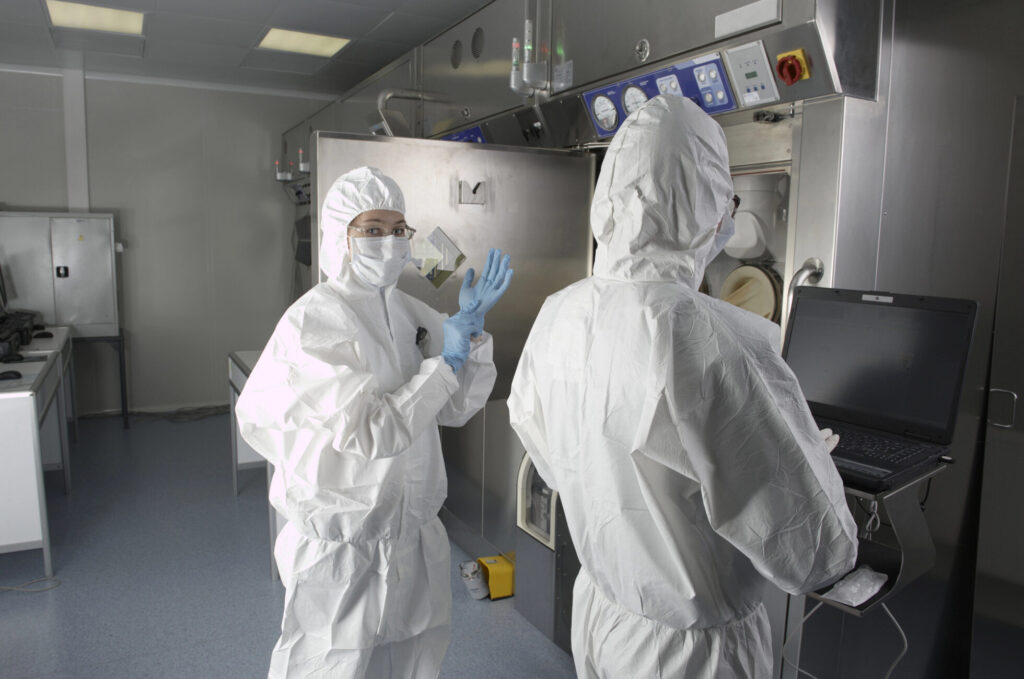
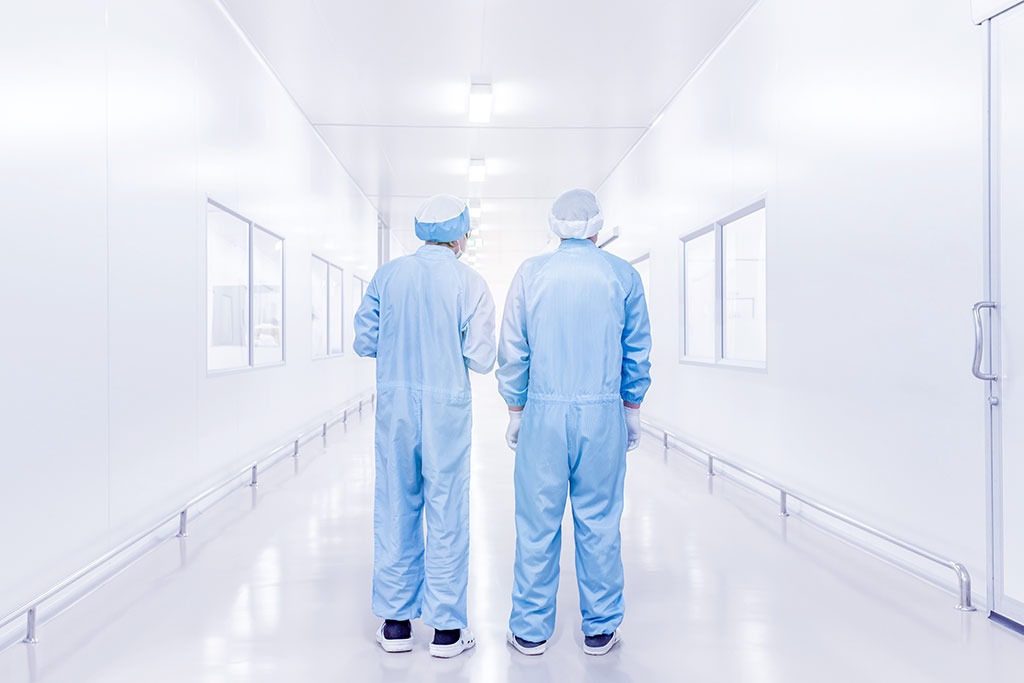
Behind every surgical breakthrough and research discovery lies sophisticated infrastructure that makes innovation possible. The Texas Medical Center houses the world’s largest academic GMP cleanroom facility—8,600 square feet of sterile manufacturing space at the Center for Cell and Gene Therapy [9]. Located within Baylor College of Medicine and Texas Children’s Hospital, these ISO 7–certified cleanrooms enable researchers to manufacture experimental cell and gene therapies for clinical trials.
These controlled environments represent just one example of the precision infrastructure supporting the Medical Center’s work. From the operating rooms performing 180,000 surgeries annually to the laboratories conducting thousands of clinical trials, exacting standards of measurement and environmental control underpin every aspect of patient care and research at the Texas Medical Center.
Supporting Houston’s Scientific Excellence for Over 50 Years
The Texas Medical Center’s groundbreaking research and life-saving patient care depend on precision, accuracy, and regulatory compliance. Since 1976, Allometrics has been proud to support Houston’s life sciences and medical research community as a complete laboratory solutions provider. Our A2LA ISO 17025 accredited services—including calibration, metrology, and controlled environment certification—help make sure that the instruments driving medical innovation maintain the exacting standards Houston’s healthcare institutions demand.
Frequently Asked Questions About the Texas Medical Center
Yes, the Texas Medical Center is the world’s largest medical complex. We span over 1,345 acres in Houston with 61 member institutions, over 120,000 employees, and 10 million annual patient encounters, making us roughly twice the size of downtown Houston.
The Texas Medical Center houses over 60 member institutions across our 1,345-acre campus. These institutions include hospitals, research centers, medical schools, and specialty facilities connected by 7 miles of tunnels and skywalks throughout the complex.
We’re known for pioneering the first successful U.S. heart transplant in 1968, performing the first coronary artery bypass in 1964, housing the world’s largest cancer hospital, and recent innovations like the first human implantation of a magnetically levitated artificial heart in 2024.
Resources
- https://www.colliers.com/en/news/houston/texas-medical-center-2019-houston-economic-outlook
- https://www.tshaonline.org/handbook/entries/hermann-hospital
- https://www.houstonmethodist.org/
- https://www.texasheart.org/https://www.mdanderson.org/
- https://www.cancer.gov/
- https://health.usnews.com/best-hospitals/rankings/cancer
- https://www.nobelprize.org/prizes/medicine/2018/summary/
- https://www.tmc.edu/operations/tmc-campus/
- https://www.bcm.edu/academic-centers/cell-and-gene-therapy/services-manufacturing