
Sterile compounding pharmacies face an ongoing challenge: proving their cleanrooms maintain the precise environmental conditions required to protect patient safety. USP 797 environmental monitoring provides the framework for this verification, but the November 2023 revisions significantly increased both the frequency and scope of required testing.
For pharmacy directors managing hospital compounding operations or independent sterile preparation facilities, these changes mean coordinating monthly surface sampling, facility recertification every six months with non-viable particle counting, and personnel competency testing—all while maintaining uninterrupted patient care.
This guide explains the specific environmental monitoring requirements under current USP 797 standards, including sampling frequencies for different CSP categories, where and how to collect samples, and the exact steps to take when results exceed established thresholds. Understanding these requirements helps ensure your facility maintains continuous compliance while minimizing disruption to clinical operations. [1]
What is USP 797 Environmental Monitoring?
USP 797 environmental monitoring is a program of systematic testing that verifies sterile compounding areas maintain appropriate microbial and particle control. This includes:
- Viable air sampling – Testing for living microorganisms in cleanroom air with documented frequencies. Often conducted during six-month recertification visits for operational convenience, though Category 3 facilities typically require more frequent testing.
- Surface sampling – Detecting microbial contamination on work surfaces and equipment (monthly for Category 1/2, weekly for Category 3)
- Non-viable particle counting – Measuring airborne particles during six-month facility recertification
- Personnel competency testing – Gloved fingertip sampling and media fills to validate aseptic technique
These monitoring activities provide objective data showing that engineering controls, cleaning procedures, and personnel practices effectively minimize contamination risks to compounded sterile preparations.
Viable and Non-Viable Air Sampling Frequency Requirements
Air quality testing in sterile compounding facilities involves two distinct approaches: non-viable particle counting that measures all airborne particles regardless of whether they’re alive, and viable air sampling that specifically detects living microorganisms. Both serve different purposes in your environmental monitoring program.
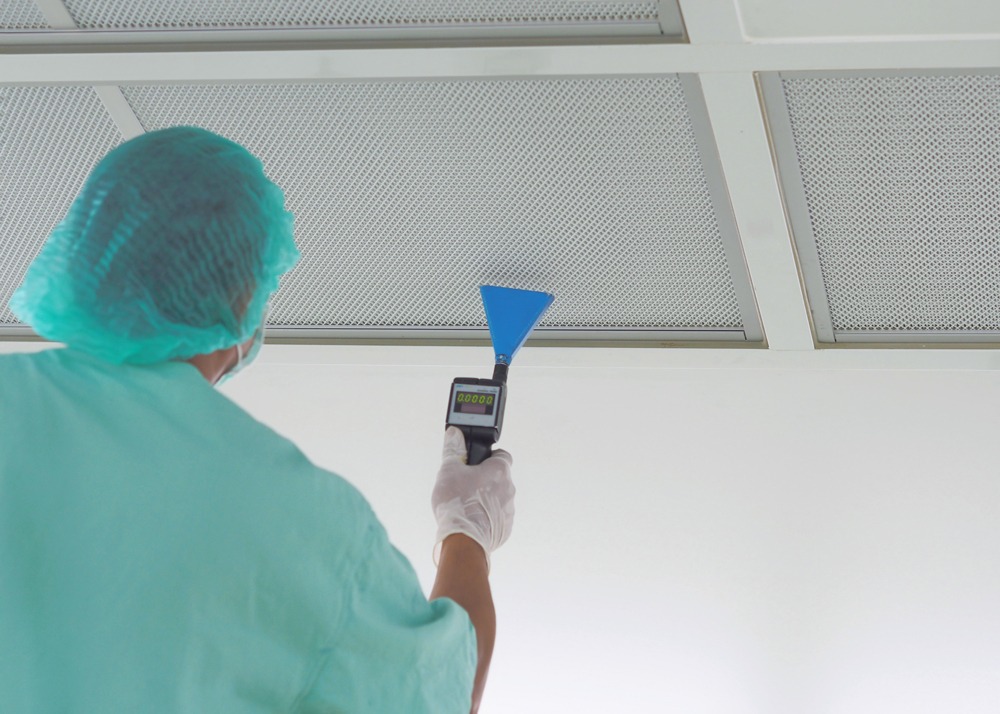
Non-viable particle counting is required by USP 797 during six-month facility recertification to verify your cleanroom maintains appropriate ISO classifications.
Viable air sampling frequency is determined by your facility’s written sampling plan, which you develop based on risk assessment, CSP categories, operational factors, and historical monitoring trends. The 2023 USP revision clarified that facilities must establish documented sampling procedures but did not mandate specific routine sampling intervals.
Quick Reference: Testing Frequency by CSP Category
| CSP Category | Non-Viable Particle Counting (USP 797 Requirement) | Viable Air Sampling (Facility-Determined) | Surface Sampling (USP 797 Requirement) |
| Category 1 & 2 | Every 6 months during recertification | Per facility’s written sampling plan (commonly aligned with recertification) | Monthly minimum |
| Category 3 | Every 6 months during recertification | Per facility’s written sampling plan (commonly monthly or more frequent) | Monthly minimum |
What Gets Tested During Six-Month Recertification
Your certification technician tests multiple parameters simultaneously:
- Particle counts in all PECs, buffer rooms, ante-rooms, and pass-throughs
- Airflow velocities
- HEPA filter integrity
- Pressure differentials between rooms
ISO Class 5 limits: Maximum 3,520 particles (0.5 microns) per cubic meter; zero particles at 5.0 microns.
Recertification visits test multiple parameters simultaneously to give you a complete picture of your cleanroom performance. While technicians are measuring particle counts, they’re also verifying airflow velocities, testing HEPA filter integrity, and checking pressure differentials between adjacent rooms. This coordinated approach makes efficient use of your scheduled downtime and provides comprehensive documentation of your environmental controls.
If any area fails to meet its particle count limits, you cannot use that space for compounding until the problem gets corrected and the area passes retesting. Common causes of failures include compromised HEPA filters, inadequate airflow velocities, or damaged cleanroom surfaces that generate particles. [2]
Viable Air Sampling: Establishing Your Facility’s Testing Plan
USP 797 requires facilities to develop and implement written procedures for microbiological air monitoring that specify sampling locations, frequency, methodology, and action levels. The standard does not mandate specific frequencies for routine viable air sampling. Your facility determines appropriate sampling intervals based on:”
- CSP categories compounded
- Facility design and classification
- Compounding volume and complexity
- Historical environmental monitoring trends
- Risk assessment outcomes
Common industry practice: Category 1 and 2 facilities often conduct viable air sampling during six-month recertification visits. Category 3 facilities typically implement monthly or more frequent sampling due to higher contamination risks associated with non-sterile starting materials.
Equipment: Volumetric air samplers pulling minimum 1,000 liters
Locations: At least one sample per classified area (buffer rooms, ante-rooms, interior of each PEC)
Timing: During or after compounding (worst-case conditions)
Incubation options:
- Single-plate: 30-35°C for 48+ hours, then 20-25°C for 5+ days
- Dual-plate: Both temperatures concurrently (captures both bacteria and fungi)
Understanding CSP Categories
The 2023 USP revision replaced the previous risk level system with three distinct categories that determine your monitoring frequency and other requirements.
Category 1 covers simple compounding using commercially sterile products within ISO Class 5 environments—this includes most routine hospital IV preparations.
Category 2 involves multiple sterile ingredients, complex processes, extended manipulations, or pooling of multiple sterile products.
Category 3 includes preparations exposed to room temperature for more than 12 hours before sterilization, or those requiring terminal sterilization of non-sterile ingredients.
Your CSP category directly determines how often you perform viable air sampling, surface sampling, and personnel competency testing, along with the beyond-use dating you can assign to finished preparations.
Surface Sampling Locations and Action Level Thresholds
Surface sampling represents one of the most significant changes in the 2023 USP 797 revision. Previous versions used the vague term “periodic” testing, leaving facilities uncertain about how often they needed to sample. The current standards eliminate that ambiguity with specific monthly and weekly requirements that have substantially increased both testing frequency and associated costs for most compounding operations.
USP 797 Minimum Sampling Frequency Category 1 & 2: Monthly minimum in all classified areas
- Every buffer room, ante-room, and PEC interior
- More frequent sampling may be necessary based on risk assessment
Category 3: Monthly minimum PLUS batch-specific sampling
- Sample direct compounding surfaces after each batch, before cleaning
- Provides immediate feedback on aseptic technique
- Batch-specific sampling detects problems before they affect multiple preparations
What Media Fill Testing Evaluates
Media fill tests validate aseptic technique by having technicians perform compounding procedures using growth media instead of drug products. If microorganisms enter during the process, they grow in the media and become visible.
These tests simulate actual compounding as closely as possible. Growth indicates technique failures—improper hand hygiene, garbing errors, touch contamination, or other breaks in aseptic procedure. Initial competency testing occurs before independent work begins, while revalidation testing confirms continued competency over time.
Need help implementing your environmental monitoring program? Call (281) 474-3329 to request a detailed quote for monthly surface sampling programs tailored to your facility size and CSP categories.
Required Sampling Locations
Inside each PEC:
- Direct compounding surface
- Equipment stored in hood during use
Buffer rooms and ante-rooms:
- All horizontal surfaces
- Pass-through chambers
- Door handles, light switches, supply cart handles in classified spaces
Recommended additional locations:
- Staging areas adjacent to PECs
- Equipment stored in classified areas (IV poles, waste containers, supply bins)
- Floor areas near doorways between ISO classifications
Pro tip: Document your sampling plan on a facility map with numbered locations. This proves to surveyors you’ve designed a thoughtful monitoring program rather than sampling randomly each month.
Surface Sampling Technique
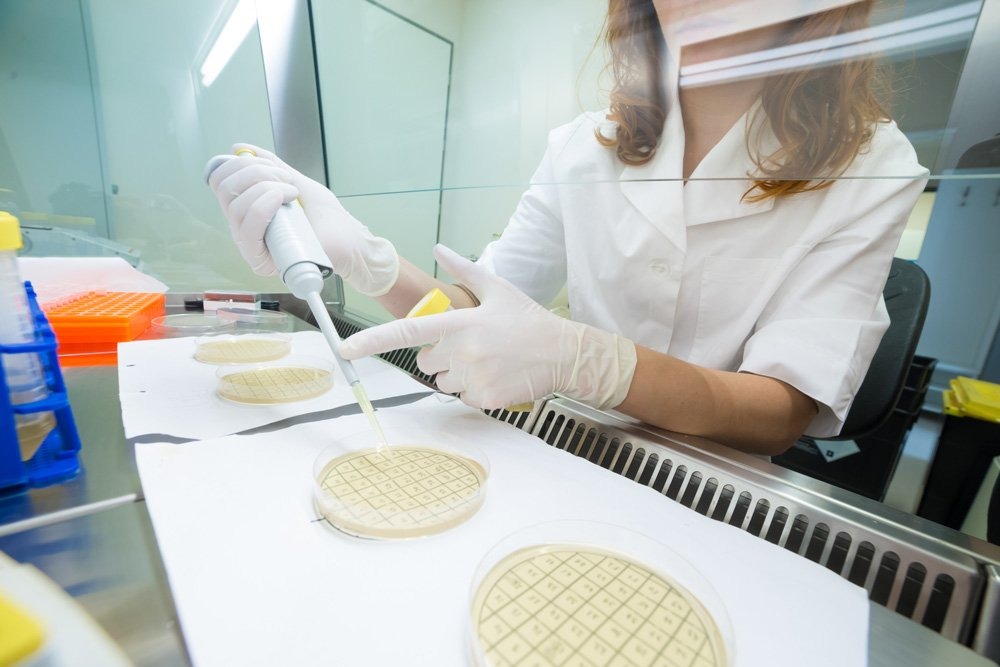
Contact plates (RODAC): 24-30 cm² sampling area with Tryptic Soy Agar containing neutralizing agents (lecithin, polysorbate 80)
Sterile swabs: For irregular surfaces like wire shelving or equipment handles
Timing: End of shift, before cleaning (worst-case scenario)
Incubation: Same as air samples (30-35°C for 48+ hours, then 20-25°C for 5+ days)
Immediate Action Organisms (Even at Low Counts)
Investigate immediately if you recover:
- Gram-negative bacteria → water intrusion or inadequate cleaning
- Coagulase-positive Staphylococcus → personnel shedding or technique failures
- Molds or yeasts → HEPA compromise, facility maintenance issues, or contaminated material introduction
Required: Identify all organisms to genus level when action levels are exceeded. This identification determines contamination source and guides corrective actions.
Personnel Competency: Beyond Environmental Monitoring
Surface sampling programs include aseptic technique verification for all compounding personnel:
Gloved Fingertip Sampling:
- Press gloved fingers/thumbs onto agar after garbing
- Initial: 3 consecutive successful tests (0 CFU)
- Ongoing requalification:
- Personnel compounding Category 1/2 CSPs: Every 6 months minimum
- Personnel compounding Category 3 CSPs: Every 3 months minimum
- Designated persons who oversee but don’t compound: Every 12 months minimum
Media Fill Testing:
- Simulate preparation using sterile growth media instead of drugs
- Initial qualification: 3 consecutive successful fills (no growth)
- Ongoing requalification: Same schedule as gloved fingertip sampling based on CSP categories
- Both tests must be performed together—they cannot be separated
- Surface samples collected immediately after media fill verify the work area remained uncontaminated
Both tests must be performed together—you cannot separate them.
Failure of either = failure of entire competency assessment.
Surface samples collected immediately after media fill verify the work area remained uncontaminated during the exercise.
How to Respond When Monitoring Results Exceed Limits
Exceeded action levels trigger investigation requirements, not automatic non-compliance. Your response documentation determines whether you’re demonstrating proper environmental control or revealing systemic problems to surveyors.
Immediate Response Checklist
When results exceed action levels:
- Stop compounding if patient safety is at risk
- Exceeded surface sample in PEC → cease using that hood until investigation complete
- Exceeded air sample in buffer room → evaluate if all PECs require shutdown or if enhanced monitoring is sufficient
- Document immediately:
- Exact sample location and CFU count
- Date, time, and personnel present during sampling
- Unusual activities or maintenance in preceding 48 hours
- Request genus-level identification (mandatory)
- Staphylococcus → personnel technique issues
- Gram-negative bacteria → water intrusion, inadequate cleaning
- Molds/yeasts → HEPA compromise, facility maintenance, contaminated materials
Conducting the Root Cause Investigation
Review all activities in the affected area during the 48 hours before sample collection. Interview personnel about unusual occurrences, spills, procedure deviations, or anything out of the ordinary that might explain elevated microbial recovery. Sometimes the explanation is straightforward—a maintenance worker accessed the area, someone spilled liquid, or a door was propped open during a busy period.
For air sample excursions, evaluate your environmental controls systematically. Verify HEPA filter integrity test results, airflow velocities, and pressure differentials. Check that supply and exhaust dampers are properly positioned and confirm temperature and humidity readings remained within acceptable ranges.
For surface sample excursions, assess your cleaning and disinfection practices:
- Cleaning frequency and disinfectant contact times
- Sporicidal agent rotation schedule
- Disinfectant expiration dates and proper dilution
- Personnel cleaning technique observations
Review personnel qualifications for everyone working in the affected area. Check current competency test results for garbing and aseptic manipulation, look for recent staffing changes or temporary personnel, and verify training completion for all staff involved.
Corrective Actions and Verification of Effectiveness
Implement targeted corrective actions that directly address your identified root cause.
Personnel issues require immediate retraining with increased supervision. Anyone who fails competency testing must complete full requalification before returning to compounding duties—there’s no shortcut when someone demonstrates inadequate aseptic technique.
Facility or equipment issues must be completely repaired before you resume compounding operations. Replace compromised HEPA filters, repair damaged surfaces that harbor contamination, or upgrade cleaning equipment that’s no longer effective. The correction has to fix the actual problem, not just address symptoms.
Verification through resampling provides objective evidence that your corrective actions worked:
- Return to same locations using identical methodology and timing
- Consider temporary increased frequency (monthly → weekly) until establishing acceptable trend
- Document all verification results for surveyor review
Investigations revealing no obvious cause still require thorough documentation. Describe the comprehensive investigation you conducted, detail your enhanced monitoring plan, and commit to tracking results for emerging patterns over time. Environmental monitoring provides point-in-time data, meaning isolated elevated results occasionally occur even in well-controlled facilities.
Documentation for Regulatory Readiness
State board inspectors and accreditation surveyors specifically review excursion responses. Required documentation:
- Original laboratory report showing excursion
- Written investigation summary with findings
- Corrective action plan with completion dates
- Verification sampling results
- Updated SOPs based on lessons learned
This documentation demonstrates your commitment to environmental control and continuous quality improvement.
Building a Sustainable Monitoring Program
Increased sampling frequency creates both operational and financial challenges. The good news? Several cost-reduction strategies can help you maintain compliance without overwhelming your budget or staff. [3]
Pre-packaged sampling kits: These arrive with contact plates, air sampling media (if conducting viable air sampling), shipping materials, and prepaid laboratory analysis. Your staff collects required samples following included instructions, then ships everything for analysis and trending reports. Subscription delivery helps prevent missed sampling deadlines.
Coordinated scheduling: Many facilities align their voluntary viable air sampling with required six-month recertification visits when certification technicians are already on-site. This approach consolidates testing activities and often qualifies for bundled pricing. However, remember that viable air sampling frequency is determined by your facility’s sampling plan, not by USP mandate.
Automated tracking systems: Digital tools help manage:
- Sampling deadline reminders (especially critical for required monthly surface sampling)
- CFU trend tracking with automated excursion flagging
- Regulatory-ready report generation
- Historical data storage for surveyor review
Ready to streamline your testing schedule? Call (281) 474-3329 to speak with our team about coordinating your recertification with ongoing monitoring schedules to reduce disruption and qualify for bundled pricing.
Why Sterile Compounding Facilities Choose Allometrics
Allometrics has served sterile compounding pharmacies since 1976, providing cleanroom certification and environmental monitoring services nationwide. This decades-long focus on pharmaceutical cleanrooms means our technicians understand the unique challenges pharmacy directors face—balancing regulatory compliance with uninterrupted patient care.
Credentials that matter during inspections:
- ISO 17025 accreditation for all monitoring instruments
- NIST-traceable measurements state boards and Joint Commission trust
- CETA and NSF certified technicians for testing and calibrating certain primary engineering controls
Our operational flexibility sets pharmacy services apart. We schedule testing around your clinical demands. Our team coordinates testing around chemotherapy preparation schedules, time-sensitive medication compounding, and your busiest patient care periods.
We serve a wide variety of facilities including:
- Hospital inpatient pharmacies
- Independent compounding facilities
- Radiopharmacies
- Oncology clinic pharmacies
This understanding of pharmacy operations—not just technical testing requirements—helps minimize disruption while maintaining the documentation quality your facility needs for regulatory readiness.
Schedule Your USP 797 Environmental Monitoring
Continuous compliance with environmental monitoring requirements protects both patient safety and your facility’s ability to maintain uninterrupted compounding operations. A well-designed monitoring program catches contamination issues before they affect patients while providing the documentation surveyors expect during accreditation visits.
Contact Allometrics at (281) 474-3329 to organize your USP 797 environmental monitoring needs under one roof and develop a testing schedule that meets all regulatory requirements while respecting your operational constraints and clinical priorities.
USP 797 Environmental Monitoring: Your Questions Answered
USP 797 environmental monitoring requires systematic testing that verifies sterile compounding areas maintain appropriate microbial and particle control. We conduct viable air sampling to test for living microorganisms, perform surface sampling to detect microbial contamination on work surfaces and equipment, use non-viable particle counting to measure airborne particles, and verify personnel competency through gloved fingertip sampling and media fills.
USP 797 requires us to conduct surface sampling monthly for Category 1 and 2 facilities, perform facility recertification every six months with non-viable particle counting, and complete personnel competency testing at regular intervals. Category 3 facilities face more stringent requirements including batch-specific surface sampling after each batch before cleaning, providing immediate feedback on aseptic technique and contamination control.
Resources
- https://www.wolterskluwer.com/en/expert-insights/what-is-usp-797-and-how-to-stay-compliant
- https://www.fda.gov/media/124948/download
- https://academic.oup.com/ajhp/article-abstract/62/12/1271/5135729?login=false